Cordon Bleu Finch
This page is educational reference material for preparing questions. A licensed veterinarian examines the animal, makes the diagnosis, and sets the treatment.
Affiliate links may earn a commission. Affiliate disclosure.
Quick Facts
| Attribute | Details |
|---|---|
| Type | Finch |
| Size | Very Small (5 in) |
| Lifespan | 7-10 years |
| Noise Level | Low (soft warble) |
| Diet | Seeds, live insects, egg food |
| Care Level | Intermediate |
| Cage Size | 24x12x18 inches minimum (flight cage preferred) |
Recommended for Cordon Bleu Finches
Kaytee - Premium bird food | Lafeber - Quality bird nutrition | Chewy - Cages & accessories
Cordon Bleu Finch Overview
The Cordon Bleu Finch is a very small (5 in) finch that has captivated bird enthusiasts worldwide. With a lifespan of 7-10 years, this species offers years of enjoyment for dedicated keepers. Their low (soft warble) noise level makes them suitable for apartments and noise-sensitive environments.
As an intermediate-level bird, the Cordon Bleu Finch is well-suited for owners with some bird-keeping experience. Their diet of seeds, live insects, egg food requires consistent quality and variety.
The cordon-bleu is a waxbill finch in the genus Uraeginthus, not a parrot. The card lists it as very small, about 5 inches, with a lifespan of 7 to 10 years. Noise is low, a soft warble. Care level is intermediate. These birds are kept to watch, as a pair or a small group. They are not candidates for shoulder time, talking lessons, or a mirror and a bell sold as parrot enrichment. A single cordon-bleu in a living-room cage is a social mistake.
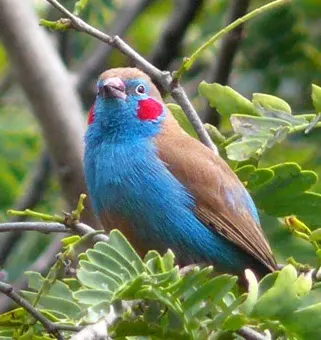
In the common species, males show the blue belly and the red cheek. That pattern is how keepers sex a mature male of the red-cheeked bird. Hens lack the red cheek patch, and young birds can be ambiguous, so a shop label is not the last word. Other Uraeginthus species do not wear the same face. Buying a group of mixed waxbills and calling all of them cordon-bleus produces fights and a breeding result nobody planned. House compatible birds, and give them enough length of cage to pass one another.
The diet is seeds, live insects, and egg food. A dry finch mix is the base, not the whole menu. Small live foods and egg food supply the protein these waxbills use, especially when they are breeding or molting. Greens should be fresh and brief, then removed. Avocado does not belong in the cage, not as a treat and not as a leftover from a human plate. The same rule covers chocolate, caffeine, and anything salted. A 5-inch bird cannot afford a toxic experiment.
Housing Requirements
Providing appropriate housing is essential for Cordon Bleu Finch health and happiness: Your avian veterinarian and experienced Cordon Bleu owners can offer perspective tailored to your situation.
- Bar Spacing: 1/4 to 1/2 inch to prevent escape or injury.
- Perches: Multiple perches of varying diameters and materials for foot health.
- Enrichment: Swings, mirrors, and bathing dishes provide enrichment.
- Cleaning: Daily water and food changes; weekly thorough cage cleaning.
Diet & Nutrition
Proper nutrition is critical for Cordon Bleu Finch health.
- Primary Diet: Seeds, live insects, egg food.
- Fresh Foods: Occasional greens and egg food for supplementation.
- Supplements: Cuttlebone and mineral grit for calcium.
- Fresh Water: Clean water available at all times; change daily.
- Avoid: Avocado, chocolate, caffeine, alcohol, and high-salt foods are toxic to birds.
Top Food Choices for Cordon Bleu Finches
Kaytee - Premium seed mixes | Lafeber - Nutritious bird foods | Chewy - Wide selection of bird foods
Feeding a Cordon Bleu Finch well is less about following trends and more about paying attention to your specific animal. Some Cordon Bleu Finches do great on standard species-appropriate avian pellets and fresh foods; others need a different approach due to allergies, sensitivities, or individual metabolism. Work with your vet to find what works, and be willing to adjust as your Cordon Bleu Finch's needs change with age.
Learning to read a pet food label takes five minutes and will serve you for the life of your Cordon Bleu Finch. Look at the guaranteed analysis for protein and fat percentages that match your Cordon Bleu Finch's needs.
Health Issues
Cordon Bleu Finches can be susceptible to several health conditions.
- Respiratory Infections: Caused by drafts, poor air quality, or bacteria. Signs include wheezing, nasal discharge, and tail bobbing.
- Feather Issues: Abnormal molting or feather loss may indicate health problems.
- Nutritional Deficiencies: Egg binding in females from calcium deficiency.
- Parasites: Mites and internal parasites can affect pet birds. Regular vet checks help prevent issues.
- Egg Binding: Females may become egg-bound; maintain proper calcium and nutrition.
Avian Vet Care
Birds hide illness instinctively. By the time symptoms are visible, the bird may be seriously ill. Find an avian veterinarian before you need one, and schedule annual wellness checks for your Cordon Bleu Finch.
Avian health management for Cordon Bleu Finch requires a proactive approach built on understanding that birds, like all prey species, instinctively conceal signs of illness until they can no longer compensate. By the time a Cordon Bleu Finch displays obvious symptoms such as fluffed feathers, tail bobbing, or sitting on the cage bottom, the underlying condition may already be advanced. This makes routine preventive care, regular wellness examinations with an avian veterinarian, and attentive daily observation essential components of responsible Cordon Bleu Finch ownership.
Nutritional health is one of the most significant and controllable factors influencing your Cordon Bleu Finch's long-term wellbeing. A complete diet for Cordon Bleu Finch should center on high-quality formulated pellets (comprising 60-70% of intake) supplemented with fresh vegetables, appropriate fruits, and species-specific treats. Transitioning a seed-addicted Cordon Bleu Finch to a balanced diet requires patience and creativity, but the health benefits are substantial and well-documented.
Environmental health factors play a larger role in Cordon Bleu Finch health than many owners realize. Creating a safe, controlled environment for your Cordon Bleu Finch is as important as diet and veterinary care in maintaining long-term health.
Temperament & Behavior
- Noise: Low (soft warble) - one of the quieter bird species, suitable for apartments.
- Vocalizations: Males typically sing more than females.
- Activity: Active flyers that prefer flight space over handling.
Give the waxbills at least 24 by 12 by 18 inches, and prefer a flight cage to a tall box. Drafts are the other half of housing. A window cracked behind the cage, or an air vent aimed at the perches, chills birds this small. Keep the flight out of the kitchen and out of direct midday sun through glass. Bar spacing has to be narrow enough that a waxbill cannot slip through. Cover at one end lets the group retreat when the room is busy. Open wire on all sides, in a hallway, is a stressful address.
Seven to 10 years is the lifespan to plan, which is longer than people assume when the bird was inexpensive. Intermediate care means the pair, the insects, the temperature, and the daily look at droppings, not a complicated training program. A soft warble is the normal voice. A bird that goes silent, sits low, or breathes with an open beak needs a veterinarian who treats finches, the same day. These birds decline quickly, and a dog-and-cat clinic may not be equipped for a 5-inch patient.
Eggs and extra males are the management problem in a group that seemed peaceful in the store. Provide a nest only if you are prepared for chicks, and separate birds that start driving others off the perches. Live insects should be gut-loaded and sized for a waxbill, not dumped in as a pile of large worms. Egg food spoils in heat and should be offered in a small dish that is washed out. The soft warble, the blue belly, and the red cheek are the pleasure of the common male. The work is the flock, the diet, and a cage that does not leak cold air.
Is This Bird Right for You?
Think of this as the knowledge layer that most Cordon Bleu owners skip and later wish they had started with. Generic recommendations are a reasonable starting point, but the Cordon Bleu you live with ultimately sets the standard.
Cordon Bleu Finches Are Great For:
- Experienced bird keepers
- Apartment dwellers and noise-sensitive households
- Those who prefer watching birds rather than handling
- People committed to providing proper diet and housing
Cordon Bleu Finches May Not Be Ideal For:
- Those unable to commit to regular care routines
- Owners expecting a very long-lived pet
- People who want a completely silent pet
Ask Our AI About Cordon Bleu Finches
Have specific questions about Cordon Bleu Finch care, diet, or health? Our AI assistant can provide personalized guidance.
Whether a Cordon Bleu Finch fits your life comes down to a few practical questions. Is your living space suitable? Can you afford both routine care and the occasional surprise vet bill over the next 7-10 years? If the honest answers line up, a Cordon Bleu Finch can be a genuinely good match.
People who live with a Cordon Bleu Finch tend to develop a deep appreciation for the breed's personality — its distinct character becomes part of the household's rhythm.
When to See the Vet
A short avian-vet check-in before a real Cordon Bleu diet change catches interactions that are hard to spot from outside the clinic.
- Lumps and bumps: Any new or changing growths should be examined. While many are benign, early detection of cancerous masses improves treatment outcomes.
Diet and Nutrition Tips
A balanced diet is critical for your Cordon Bleu Finch's longevity and quality of life. Many health issues in pet birds are directly related to nutritional deficiencies.
- Pellet base: A high-quality pelleted diet should form 60-70% of your Cordon Bleu Finch's food intake. Pellets provide balanced nutrition that seed-only diets cannot.
- Fresh produce: Offer a variety of fresh vegetables and fruits daily. Dark leafy greens, carrots, sweet potatoes, and berries are excellent choices.
- An all-seed diet leads to obesity and fatty liver disease.
- Toxic foods: Never feed avocado, chocolate, caffeine, alcohol, onion, garlic, or fruit pits to your Cordon Bleu Finch. These are toxic to birds.
Exercise Requirements
Adequate flight time and physical activity are essential for your Cordon Bleu Finch's physical and mental health. Birds that lack exercise can develop obesity, muscle atrophy, and behavioral problems.
- Flight time: Allow supervised out-of-cage time daily in a bird-safe room. Even clipped birds benefit from flapping exercise and climbing opportunities.
- Cage size: Provide the largest cage possible with horizontal space for movement. The cage should allow your Cordon Bleu Finch to fully extend and flap their wings.
- Enrichment toys: Rotate toys regularly to prevent boredom. Include foraging toys, puzzle feeders, and chew toys appropriate for your Cordon Bleu Finch's size.
- Social interaction: Spend quality interactive time with your Cordon Bleu Finch daily. Birds are highly social and need regular engagement with their human flock.
Training Advice
Training your Cordon Bleu Finch builds trust, provides mental stimulation, and makes daily care much easier. Birds are highly intelligent and respond well to positive reinforcement techniques.
- Step-up command: Teach this essential command first.
- Positive reinforcement: Use favorite treats, head scratches, or verbal praise as rewards. Never punish a bird, as it destroys trust and worsens behavior.
- Short sessions: Keep training sessions to 10-15 minutes. End on a positive note before your Cordon Bleu Finch loses interest or becomes frustrated.
- Target training: Teach your Cordon Bleu Finch to touch a target stick. This foundational skill makes teaching complex behaviors much easier.
Grooming Essentials
Regular grooming keeps your Cordon Bleu Finch healthy, comfortable, and looking their best. Most bird grooming tasks can be performed at home with proper technique.
- Bathing maintains feather condition and skin health.
- Nail trimming: Trim nails every 4-6 weeks or as needed.
- Overgrown beaks may indicate nutritional deficiency or liver disease.
- Wing clipping: Discuss with your avian vet whether wing clipping is appropriate for your Cordon Bleu Finch's safety and lifestyle.
Living Environment
Your Cordon Bleu Finch's living environment directly impacts their physical health and psychological well-being. Invest in the best setup your space and budget allow.
- Air quality: Birds have extremely sensitive respiratory systems. Avoid candles, air fresheners, non-stick cookware fumes, aerosol sprays, and cigarette smoke.
- Temperature: Maintain room temperature between 65-80 degrees Fahrenheit. Avoid placing the cage near heating vents or air conditioning units.
- Sleep schedule: Birds need 10-12 hours of quiet, dark sleep each night.
Helpful Resources for Cordon Bleu Finch Owners
Experienced Cordon Bleu owners often cite this as the factor they wish they had taken more seriously at the start.
Explore More Guides
Get Personalized AI Guidance
Ask Our AI NowDecision Guides for Cordon Bleu Finch
Use these only when comparing food, insurance, ownership budget, or beginner fit for this specific pet.
Cost of Ownership
Planning ahead financially is one of the most practical things you can do before getting a Cordon Bleu Finch. Account for the predictable costs, set aside money for the unpredictable ones, and avoid the trap of thinking you will figure it out as you go. Cordon Bleu Finch care costs are real and ongoing.
These cost ranges reflect typical spending, but every Cordon Bleu Finch is different. Some sail through life with minimal health issues, while others need more veterinary attention. Geographic location also plays a role — veterinary fees, grooming costs, and even pet food prices vary widely between regions. Use these numbers as a planning baseline, not a guarantee.
Most new Cordon Bleu Finch owners are surprised by first-year costs. The initial setup — vet visits, vaccinations, supplies, and often training classes — can easily double the annual maintenance figure. The good news is that subsequent years are more predictable. Just keep in mind that senior Cordon Bleu Finches may need additional care as they enter the last few years of their 7-10 years lifespan.
Think of preventive care as an insurance policy with a guaranteed payout. The cost of annual exams, vaccinations, and routine health monitoring is a known quantity you can budget for. The cost of treating a preventable disease is unpredictable and almost always higher. For Cordon Bleu Finch owners, staying on top of preventive care is one of the simplest ways to reduce lifetime veterinary expenses.