Budgerigar (Parakeet)
This page is educational reference material for preparing questions. A licensed veterinarian examines the animal, makes the diagnosis, and sets the treatment.
Affiliate links may earn a commission. Affiliate disclosure.
Quick Facts
| Attribute | Details |
|---|---|
| Scientific Name | Melopsittacus undulatus |
| Origin | Australia |
| Size | Small (6-8 inches, 25-35 grams) |
| Lifespan | 5-10 years (up to 15 with excellent care) |
| Noise Level | Low to Moderate |
| Talking Ability | Good (can learn 100+ words) |
| Diet | Seeds, pellets, vegetables, fruits |
| Care Level | Beginner-friendly |
| Space Requirements | Minimum 18x18x18 inch cage |
Recommended for Budgerigars
Harrison's Bird Foods - Certified organic pellets for small birds | Lafeber - Premium nutri-berries and pellets | Kaytee - Complete budgie nutrition and treats
Top Food Choices for Budgerigars
Harrison's Bird Foods - Organic pellets formulated by avian vets | Lafeber Nutri-Berries - Balanced nutrition birds love | Mazuri - Zoo-quality small bird nutrition
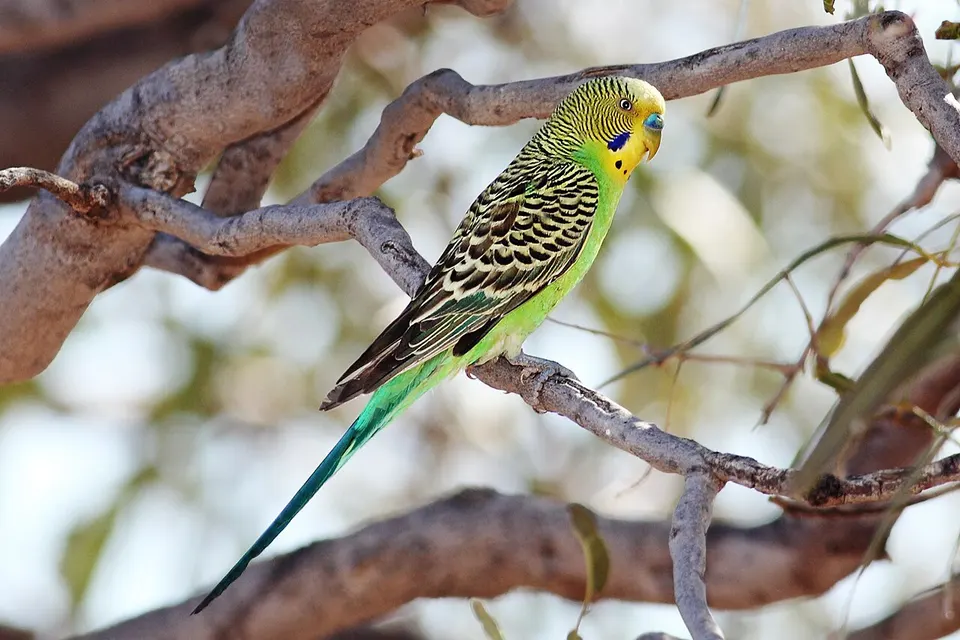
Budgerigars are the small green-and-yellow parrots of inland Australia, even though pet shops mostly sell blue and pied birds. They weigh about an ounce, stretch 6 to 8 inches including the tail, and live in flocks. That last fact drives the care. A budgie is beginner-friendly only when the house can offer company, a wide cage, and food that is not a millet stick.
Width beats height
The quick-facts card lists an 18-inch cube as a minimum. Treat that as the smallest box sold with a bird, then buy wider. Thirty inches of horizontal flight, half-inch bar spacing, and perches that are not all one diameter will do more for the feet and the mood than a tall tower of plastic toys. Natural perches, a cuttlebone or mineral block, and toys that get destroyed and replaced are the setup. Keep the cage out of the kitchen. Fumes from overheated nonstick pans kill birds.
Noise is low to moderate for a parrot and still constant chirping. Talking happens. A hundred-word budgie is a chatty individual, not a guarantee. Males typically sing and tap more; the cere (the fleshy band above the beak) is usually blue on adult males and brown or tan on adult females, with exceptions in some color varieties.
Pellets, iodine, and the seed habit
A seed mix is a treat base, not a diet. Offer a small-parrot pellet and vegetables most days: leafy greens, carrot, herbs. Millet is a training reward. Iodine deficiency and obesity are the classic seed-bowl diseases, along with tumors in middle age. Convert a seed-addicted bird slowly so it does not starve in front of a full dish it refuses to recognize.
Budgies are hardy until they are not, and they hide illness. A bird sitting fluffed on the cage floor, a tail that bobs with each breath, or droppings that turn from formed to water is a same-day avian visit. The Association of Avian Veterinarians has a tool to find a bird vet. General emergency sorting is on the checker, and a quiet bird is described on the bird symptom page.
A pair plus a decent cage, toys, and pellets often lands around $200 to $400 to start, then a modest monthly food bill. Yearly wellness with an avian vet costs more than people expect and prevents more than it treats. This is a good first bird for someone who likes chatter. It is a bad first bird for someone who will cover the cage and leave for the weekend with a seed cup.
Budgie setup that actually works
Is an 18-inch cube cage enough?
It is the number often printed on starter kits, and it is tight. A budgie flies horizontally. A cage closer to 30 inches wide, with the bars about half an inch apart, lets the bird move instead of climbing in place.
Can you keep one budgie?
You can, if you are the flock and you are home a lot. Two budgies are usually kinder, and they will bond to each other more than to you. Either plan beats a single bird in a silent room.
How long do they live?
Often 5 to 10 years, and closer to 15 when the diet, the air, and the vet care are good. Seed-only bowls and fumes from nonstick pans shorten that.
Are they beginner birds?
Yes, compared with cockatoos and greys, if you skip the tiny toy cage and the all-seed diet. They are a poor beginner project for someone who wants a quiet ornament.
Decision Guides for Budgerigar (Parakeet)
Use these only when comparing food, insurance, ownership budget, or beginner fit for this specific pet.