Pacman Frog (Ceratophrys)
This page is educational reference material for preparing questions. A licensed veterinarian examines the animal, makes the diagnosis, and sets the treatment.
Affiliate links may earn a commission. Affiliate disclosure.
Quick Facts
| Attribute | Details |
|---|---|
| Scientific Classification | Amphibian |
| Size | Medium-Large (4-7 in) |
| Lifespan | 6-10 years |
| Temperature | 75-85°F |
| Humidity | 60-80% |
| Enclosure | 10+ gallon terrestrial |
| Care Level | Beginner |
| Diet | Crickets, dubia roaches, earthworms, pinkie mice |
| Temperament | Ambush predator, Sedentary |
| Origin | South America (Argentina, Brazil) |
| Habitat Type | Terrestrial, burrowing |
| Typical Cost | $20-$60 for animal; $100-$200 setup |
Recommended for Pacman Frog (Ceratophrys) Keepers
Zoo Med — Heating, lighting & habitat supplies | Exo Terra — Vivariums & terrarium accessories | Chewy — Amphibian food & supplies
Pacman Frog (Ceratophrys) Food & Supplements
Chewy — Frozen bloodworms, pellets & feeder insects | Zoo Med ReptiCalcium — Calcium with D3 supplement | Oxbow — Premium small animal nutrition
Pacman Frog (Ceratophrys) Habitat Essentials
Exo Terra — Vivariums & misting systems | Zoo Med — Thermostats, hygrometers & substrates | Chewy — Terrariums & aquatic supplies
Protect Your Pacman Frog (Ceratophrys)
Spot Insurance — Exotic pet coverage options | Lemonade Pet — Affordable pet insurance plans
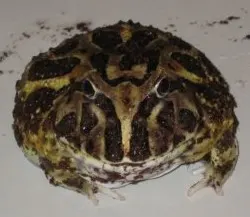
Pacman frogs are the round, wide-mouthed horned frogs from South America that sit in a hole and wait. Adults are about 4 to 7 inches, females usually larger, and they live roughly 6 to 10 years. Activity is almost none until food moves. That looks easy. The work is humidity, clean water, and not offering a pinky mouse every week because the frog lunged.
A deep substrate and one occupant
A 10-gallon tank is the quick facts minimum and is tight for a large female. A 20-gallon long with several inches of moist coconut fiber or a soil mix that holds a burrow is more honest. Temperatures of 75 to 85°F, humidity 60 to 80 percent, a water dish they can sit in, and a lid that holds damp air. They do not need height. They need dirt. Keep one frog per tank. The mouth is the personality.
Insects first
Crickets, dubia roaches, and earthworms, dusted with calcium, are the diet. Feed adults a couple of times a week. Pinky mice appear on some care sheets and on this page's quick facts. Treat them as a rare extra for a large adult, not the menu. Frequent rodents make obese frogs and messy water. Tong-feed so your finger is not the moving object. A bite hurts, then it lets go. Wash the nick.
Handling is for moves between tanks, not for show-and-tell. Their skin dries and they stress. Red leg, a bacterial skin and blood infection, looks like redness on the belly and legs and is an emergency in amphibians. Prolonged refusal to eat, after you have checked that the tank is warm and damp enough, needs an exotic vet from the ARAV directory.
The not-eating guide and the checker are the same-day tools on this site. First-year costs often land around $250 to $700 if you already own a thermostat. Pacman frogs suit someone who likes an animal that displays itself by barely moving. They frustrate people who wanted a frog that climbs to the glass when they walk in.
Pacman frog bite and burrow
Do Pacman frogs bite?
Yes, as a feeding reflex. It is not a venomous bite and it can still draw blood on a finger that smells like a cricket. Use feeding tongs and keep handling rare.
What temperatures and humidity?
About 75 to 85°F and 60 to 80 percent humidity, with substrate deep enough to burrow. A dry tank is how these frogs get stuck sheds and refuse food.
Can two live together?
No. They will eat a tankmate that fits in the mouth, including another Pacman frog. One frog per enclosure.
How long do they live?
Often 6 to 10 years, shorter than a White's tree frog. The care level is beginner if you can keep humidity and resist overfeeding.
Decision Guides for Pacman Frog (Ceratophrys)
Use these only when comparing food, insurance, ownership budget, or beginner fit for this specific pet.