Fire-Bellied Toad
This page is educational reference material for preparing questions. A licensed veterinarian examines the animal, makes the diagnosis, and sets the treatment.
Affiliate links may earn a commission. Affiliate disclosure.
Quick Facts
| Attribute | Details |
|---|---|
| Scientific Classification | Amphibian |
| Size | Small (2 in) |
| Lifespan | 10-15 years |
| Temperature | 68-77°F |
| Humidity | 70-80% |
| Enclosure | 10+ gallon semi-aquatic |
| Care Level | Beginner |
| Diet | Small crickets, fruit flies, waxworms |
| Temperament | Active, Colorful, Hardy |
| Origin | East Asia (China, Korea) |
| Habitat Type | Semi-aquatic |
| Typical Cost | $5-$15 for animal; $75-$150 setup |
Recommended for Fire-Bellied Toad Keepers
Zoo Med — Heating, lighting & habitat supplies | Exo Terra — Vivariums & terrarium accessories | Chewy — Amphibian food & supplies
Fire-Bellied Toad Food & Supplements
Chewy — Frozen bloodworms, pellets & feeder insects | Zoo Med ReptiCalcium — Calcium with D3 supplement | Oxbow — Premium small animal nutrition
Fire-Bellied Toad Habitat Essentials
Exo Terra — Vivariums & misting systems | Zoo Med — Thermostats, hygrometers & substrates | Chewy — Terrariums & aquatic supplies
Protect Your Fire-Bellied Toad
Spot Insurance — Exotic pet coverage options | Lemonade Pet — Affordable pet insurance plans
A belly meant to be seen, not held
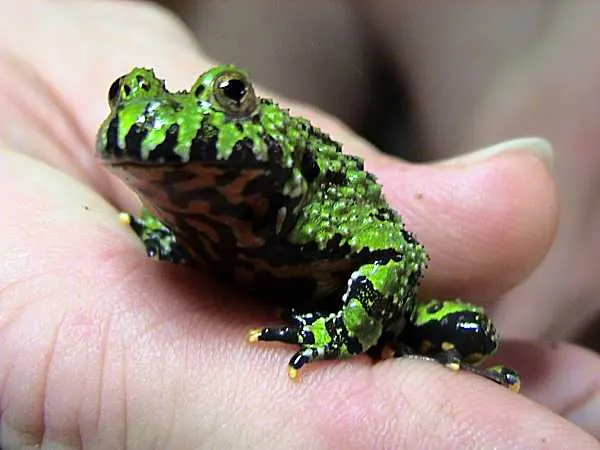
Fire-bellied toads in the pet trade are Bombina orientalis, the oriental fire-belly from China and Korea. Adults are about 2 inches. The back is green or brown and dull. The belly is orange or red and blotched. When frightened they throw the unken reflex: chin up, back arched, palms and belly on display. That color means the skin secretions are unpleasant and potentially dangerous in a mouth or an eye. They are not a handling pet, and they should not share a tank with other species.
Listed lifespan is 10 to 15 years. Temperature is 68 to 77°F, humidity about 70 to 80 percent, in a 10-gallon tank split between shallow water and land they can climb onto. Care level is beginner if you can live with a look-don't-touch animal. They are active, colorful, and tougher than dart frogs.
Half water, no deep end
They drown in a tank of deep water with slick glass and no exit. Build a slope, cork floats, or a pebble beach. Change the water. A stagnant puddle under a heat lamp is how these "hardy" toads get skin infections. Small crickets and fruit flies are the staple. Waxworms are a treat, not the diet, unless you want a round toad that cannot haul out.
Males call. It is a soft honk, not a bullfrog, and it is still audible in a bedroom. Know that before the tank goes on the nightstand.
Price and the irritant
Animals are often $5 to $15, setups about $75 to $150. Wash after maintenance even though you are not "handling" them. Red belly skin that looks raw rather than painted, or a toad that will not leave the water, deserves a clinic rather than another cricket. ARAV lists people who see amphibians. The checker and the not-eating page are the local tools while you dial.
Fire-bellied toad questions
Are fire-bellied toads the European fire belly?
No. The pet is Bombina orientalis, from China and Korea, about 2 inches long. European Bombina bombina and Bombina variegata are different animals and a poor swap.
Why do they arch their backs?
That is the unken reflex. The toad lifts its chin and pelvis to show the bright belly, which advertises skin toxins. It is a threat display, not a stretch.
Can you handle fire-bellied toads?
Almost never. Secretions irritate skin and eyes, and the toad dries out. Enjoy the display through the glass.
How long do they live?
Often 10 to 15 years in a clean semi-aquatic tank kept around 68 to 77°F. They are hardy when the water is not a swamp.
Decision Guides for Fire-Bellied Toad
Use these only when comparing food, insurance, ownership budget, or beginner fit for this specific pet.