Chinese Fire Belly Newt
This page is educational reference material for preparing questions. A licensed veterinarian examines the animal, makes the diagnosis, and sets the treatment.
Affiliate links may earn a commission. Affiliate disclosure.
Quick Facts
| Attribute | Details |
|---|---|
| Scientific Classification | Amphibian |
| Size | Small (3-4 in) |
| Lifespan | 10-15 years |
| Temperature | 58-68°F |
| Water Type | Semi-aquatic |
| Enclosure | 10+ gallon semi-aquatic |
| Care Level | Beginner |
| Diet | Frozen bloodworms, brine shrimp, small worms |
| Temperament | Hardy, Social, Active |
| Origin | China |
| Habitat Type | Semi-aquatic, cool water |
| Typical Cost | $5-$15 for animal; $75-$150 setup |
Recommended for Chinese Fire Belly Newt Keepers
Zoo Med — Heating, lighting & habitat supplies | Exo Terra — Vivariums & terrarium accessories | Chewy — Amphibian food & supplies
Chinese Fire Belly Newt Food & Supplements
Chewy — Frozen bloodworms, pellets & feeder insects | Zoo Med ReptiCalcium — Calcium with D3 supplement | Oxbow — Premium small animal nutrition
Chinese Fire Belly Newt Habitat Essentials
Exo Terra — Aquatic habitat accessories | Zoo Med — Thermostats, hygrometers & substrates | Chewy — Terrariums & aquatic supplies
Protect Your Chinese Fire Belly Newt
Spot Insurance — Exotic pet coverage options | Lemonade Pet — Affordable pet insurance plans
A small newt that wants a cool room
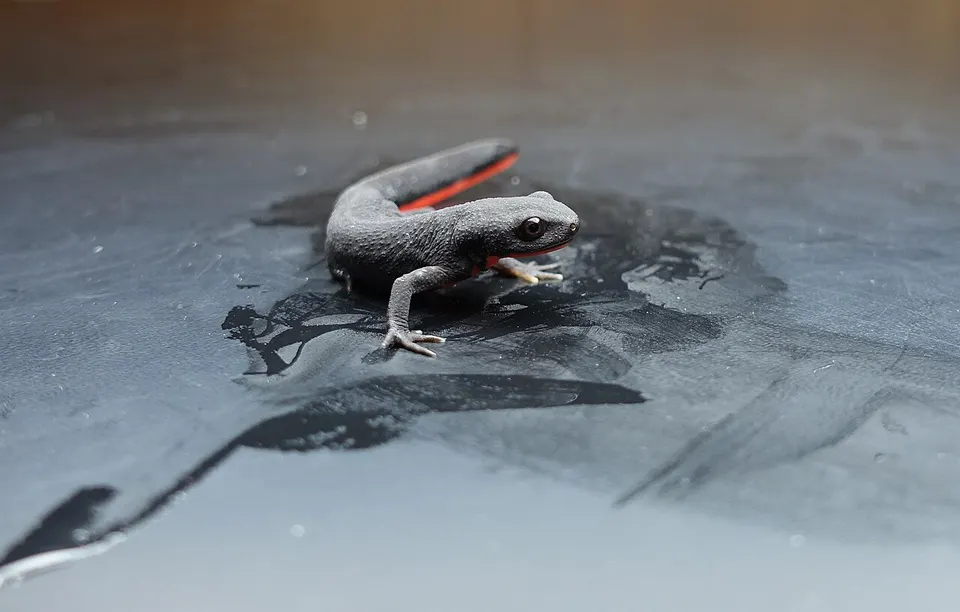
Chinese fire-belly newts are the dark little newts with a vivid belly, sold everywhere and identified properly as Hypselotriton orientalis, formerly Cynops orientalis. Adults are about 3 to 4 inches. They come from China, not from Japan. The Japanese fire-bellied newt is larger, a bit more heat-tolerant, and written up on the other newt page. Mixing the two care sheets is how these overheat.
The temperature line is 58 to 68°F. That is cooler than most houses in July. Lifespan is listed at 10 to 15 years if you solve the heat. A 10-gallon tank with water, a haul-out, and a lid fits a small group. Temperament is hardy and social with their own species. Care level is beginner only when the room is actually cool.
Toxins, worms, and no tropical heater
Frozen bloodworms, brine shrimp, and small worms are the diet. They feed in the water and on the land edge. Do not put them with fish, frogs, or the Japanese species. Skin secretions are poisonous to mouths and irritating to eyes. The bright belly is a warning color, not an invitation to pass the newt around a classroom. Wash after any necessary move.
A heater set to tropical fish temperatures is the most common fatal piece of equipment. If the house cannot stay in the 60s, this is the wrong newt.
What illness looks like
Floating, fuzzy patches, or a newt that never leaves a hot corner need a water check and then a vet who sees amphibians. ARAV keeps that list. Loss of appetite is discussed on the not-eating page, and the checker helps you decide how fast to go. Animals are often $5 to $15. A cool setup runs about $75 to $150. The cheap part is the newt. The hard part is August.
Chinese fire-belly newt questions
How cold do Chinese fire-belly newts need to be?
About 58 to 68°F. A heated tropical fish tank is too warm. In summer, a warm apartment is the husbandry problem.
Are they the same as Japanese fire-bellied newts?
No. Chinese fire-belly newts, Hypselotriton orientalis, stay smaller, about 3 to 4 inches, and like cooler water. The Japanese species has its own page.
Can children hold them?
No. The skin secretions are toxic enough that handling is for tank moves only, followed by a real hand wash. They are a watch animal.
How long do they live?
The table lists 10 to 15 years when the water stays cool and clean. Heat shortens that more reliably than a missed feeding does.
Decision Guides for Chinese Fire Belly Newt
Use these only when comparing food, insurance, ownership budget, or beginner fit for this specific pet.