African Dwarf Frog
This page is educational reference material for preparing questions. A licensed veterinarian examines the animal, makes the diagnosis, and sets the treatment.
Affiliate links may earn a commission. Affiliate disclosure.
Quick Facts
| Attribute | Details |
|---|---|
| Scientific Classification | Amphibian |
| Size | Small (1-2 in) |
| Lifespan | 5-10 years |
| Temperature | 72-82°F |
| Water Type | Aquatic |
| Enclosure | 5+ gallon aquatic tank |
| Care Level | Beginner |
| Diet | Frozen bloodworms, brine shrimp, frog pellets |
| Temperament | Peaceful, Social |
| Origin | Central Africa (Congo region) |
| Habitat Type | Fully aquatic |
| Typical Cost | $3-$10 for animal; $50-$150 setup |
Recommended for African Dwarf Frog Keepers
Zoo Med — Heating, lighting & habitat supplies | Exo Terra — Vivariums & terrarium accessories | Chewy — Amphibian food & supplies
African Dwarf Frog Food & Supplements
Chewy — Frozen bloodworms, pellets & feeder insects | Zoo Med ReptiCalcium — Calcium with D3 supplement | Oxbow — Premium small animal nutrition
African Dwarf Frog Habitat Essentials
Exo Terra — Aquatic habitat accessories | Zoo Med — Thermostats, hygrometers & substrates | Chewy — Terrariums & aquatic supplies
Protect Your African Dwarf Frog
Spot Insurance — Exotic pet coverage options | Lemonade Pet — Affordable pet insurance plans
Not a hatchling Xenopus
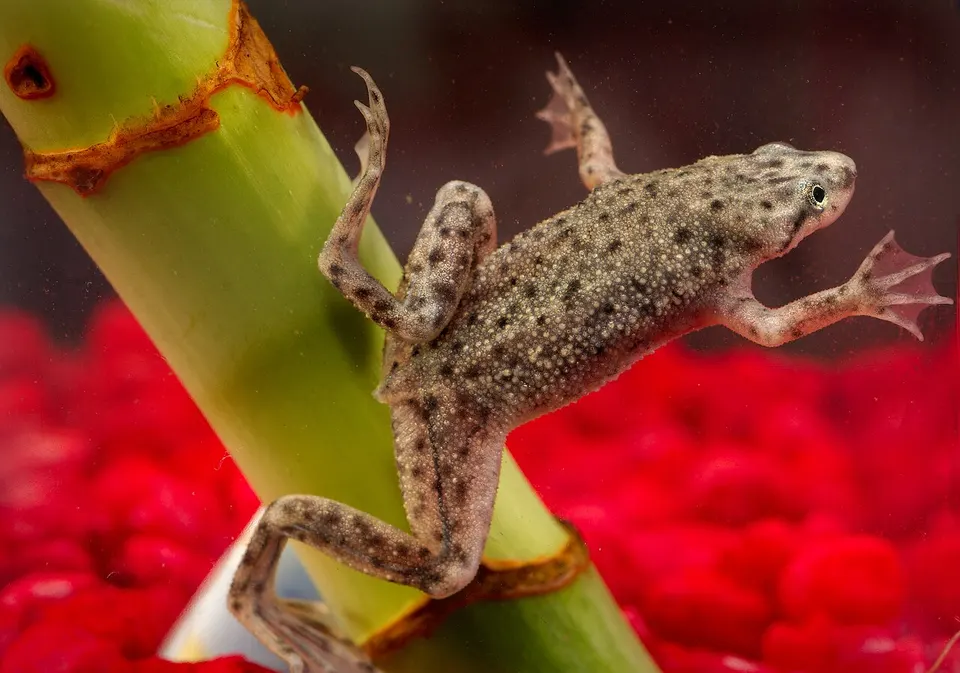
African dwarf frogs are the little fully aquatic frogs from the Congo region, usually Hymenochirus boettgeri or a close relative. Adults stay about 1 to 2 inches. People buy them thinking they are baby African clawed frogs. They are not. Clawed frogs grow several times larger, lack the dwarf frog's fully webbed feet, and will eat these if someone houses them together "until they grow."
The lifespan line is 5 to 10 years. Plan on the lower half unless the water is consistently clean. They like 72 to 82°F, a 5-gallon or larger tank, and company of their own kind. Temperament is peaceful. They are social in the sense that a lone frog in a bare bowl looks lost, not in the sense that they play.
Air, worms, and slow hunting
Dwarf frogs have lungs and shoot to the surface to gulp. Leave an open patch of water and keep the current gentle. Frozen bloodworms, brine shrimp, and frog pellets are the foods named in the quick facts. They hunt by feel and lose every race against a danio or a betta. Feed with a turkey baster or a dish on the bottom if fish share the tank, or skip the fish.
A lid still matters. They climb airlines and find the gap around a filter. Gravel they can swallow is a bad idea. Smooth sand or a bare bottom lets you see uneaten food before it rots.
Bloat and the price
A frog that floats and cannot dive, or whose thighs look swollen, needs a water test and then a vet, not another antibiotic from a fish shelf. Clinics are listed through ARAV. The checker is the urgency sort, and appetite problems in aquatic frogs sit with the not-eating notes. Purchase cost is about $3 to $10, with a setup around $50 to $150. That low price is why they end up in goldfish bowls. The bowl is the mistake.
African dwarf frog questions
Are African dwarf frogs baby clawed frogs?
No. They are Hymenochirus, a different genus. They stay about 1 to 2 inches, have webbed feet, and still need to swim up for air.
How long do African dwarf frogs live?
The table lists 5 to 10 years. Five is a realistic expectation. Ten takes clean water and a tank where faster fish are not stealing every worm.
Can they live with bettas or goldfish?
A quiet tank of their own is safer. Fast fish eat the worms before the frogs find them, and goldfish are cold, messy roommates these frogs did not evolve with.
Why do they dart to the surface?
They breathe air. A frog that cannot reach the surface, because of a tight floating plant mat or a strong current, can drown.
Decision Guides for African Dwarf Frog
Use these only when comparing food, insurance, ownership budget, or beginner fit for this specific pet.