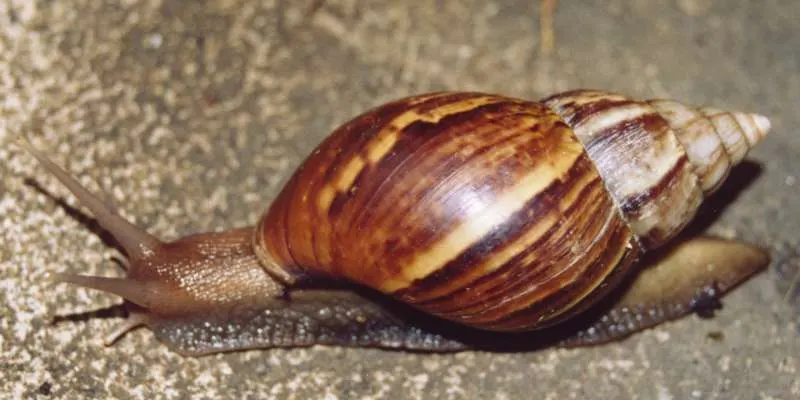
Giant African Land Snail
This page is educational reference material for preparing questions. A licensed veterinarian examines the animal, makes the diagnosis, and sets the treatment.
Affiliate links may earn a commission. Affiliate disclosure.
Quick Facts
| Attribute | Details |
|---|---|
| Type | Invertebrate |
| Size | 6-8 inches |
| Lifespan | 5-10 years |
| Temperament | Docile, Low-Maintenance |
| Difficulty | Beginner |
| Origin | East Africa |
Giant African Land Snail Overview
In the United States, the giant African land snail is federally regulated. The animal on this page is Lissachatina fulica, often sold under the older name Achatina fulica. Import, interstate movement, and possession are illegal without a USDA permit because this snail is a major crop pest. A shop label, a care card, or a low price does not replace that permit. This page is not a guide to obtaining one, hiding one, or shipping one. The legal status comes before any husbandry.
The card lists an invertebrate of 6-8 inches, a lifespan of 5-10 years, a docile and low-maintenance temperament, beginner difficulty, and an origin in East Africa. Those lines describe the animal where keeping it is legal. They do not authorize possession in the United States. Beginner and low-maintenance are husbandry words. They are not a reading of federal pest law. A snail that can reach 6-8 inches and live 5-10 years is a long-lived crop pest, which is why the permit exists.
The cost table on the card is initial setup $100-$500+, animal purchase $10-$500+, annual food and bedding $150-$500, and annual vet care $50-$200. Print those figures as the card's budget, not as a shopping list. A purchase price in the $10-$500+ range does not make an unpermitted snail legal to buy, to move across a state line, or to bring into the country. Spending the setup money on a secure enclosure is irrelevant if possession itself is prohibited where you live.
Where these snails are legal to keep, the husbandry that actually matters is calcium, humidity, and a secure lid. The shell is built from calcium, and a snail kept short of it grows a thin, pitted shell even if the vegetable bowl looks full. They need the air in the enclosure damp, not a dry box with a water dish in one corner. They are strong for an animal that looks slow, and a loose lid or a gap at the rim is an escape. A 6-8 inch snail on the floor of a house is already a containment failure.
They reproduce quickly. A legal keeper who starts with one or two can end up with a clutch, and then with far more snails than the original enclosure was built for, inside that same 5-10 year lifespan. Eggs should not be released outdoors. Do not tip substrate, egg clutches, or unwanted snails into a garden, a compost pile, or a ditch. That is how a crop pest leaves a terrarium. Surplus animals are a containment problem, not a gift to the yard.
Housing and environment design for Giant African Land Snail has evolved considerably as our understanding of small animal welfare has improved. The size and complexity of the enclosure or hutch directly correlates with your Giant African Land Snail's physical health, behavioral normality, and overall lifespan. Experienced Giant African Land Snail keepers consistently advocate for the largest enclosure or hutch that space and budget allow, supplemented with regular supervised free-roaming time outside the enclosure.
Temperament & Behavior
Humidity without a tight lid just makes an easier escape into a damp room. Calcium belongs in the diet the whole life, not as a one-time supplement when the shell already looks rough. A snail that seals itself to the glass for a long stretch may be resting, or it may be dry. Check the lid and the moisture before you decide the animal is fine because the card calls the temperament docile. Docile does not mean the animal stays put or that the shell maintains itself.
Read the law that applies where you are before you read the beginner rating again. In the United States the controlling facts are the USDA permit and the ban on import, interstate movement, and possession without it. Elsewhere, the controlling facts are calcium, humidity, a secure lid, fast reproduction, and eggs that stay out of the wild. The 6-8 inch size and the 5-10 year lifespan are the animal. They are not permission.
Social needs vary considerably among small animals, and Giant African Land Snail specifically have particular requirements that owners should understand before acquisition. Some Giant African Land Snail thrive in pairs or small groups, while others may display territorial aggression toward cage mates. Age, sex, and the introduction method all influence compatibility. Even naturally social Giant African Land Snail require careful introduction protocols when adding new cage mates—sudden introductions in shared territory can trigger fight-or-flight responses that establish lasting negative associations.
Activity patterns and play preferences in Giant African Land Snail provide important insights into their overall wellbeing. A healthy, well-adjusted Giant African Land Snail will display curiosity about new enrichment items, engage in species-typical play behaviors, and maintain consistent activity patterns within their normal circadian rhythm. Keepers who establish a baseline understanding of their individual Giant African Land Snail's normal behavior patterns are better positioned to identify and address problems early, when intervention is most effective and least costly.
Housing & Environment Requirements
Provide an appropriately sized habitat for your Giant African Land Snail.
Diet & Nutrition
Research species-specific dietary needs.
What you feed your Giant African Land Snail matters more than most owners realize. Diet affects energy, coat condition, digestive health, immune function, and even behavior. There is no single "best food" — the right choice depends on your Giant African Land Snail's age, activity level, any health conditions, and how they respond to specific ingredients. Expect some trial and adjustment, especially in the first year.
First ingredient should be a specific animal protein. Calorie content per cup helps you portion correctly for your Giant African Land Snail's size.
Common Health Issues
Research common health concerns specific to Giant African Land Snails and find a veterinarian experienced with this species before bringing one home. Early veterinary intervention is crucial as small animals can deteriorate quickly.
Good health outcomes for a Giant African Land Snail depend less on reacting to problems and more on preventing them from gaining a foothold.
DNA-based health screening has become increasingly accessible for Giant African Land Snail owners who want a clearer picture of what their individual animal may face down the road.
As your Giant African Land Snail moves through the middle stage of life, proactive adjustments make a measurable difference. The goal is not to slow aging itself, but to ensure that each stage is met with care that actually matches where your Giant African Land Snail is, not where they were two years ago.
Grooming & Maintenance
Beginner-Friendly Rating: Beginner
Giant African Land Snails are excellent for newcomers to small-animals keeping.
Before acquiring a Giant African Land Snail, research thoroughly and prepare the habitat in advance. Join online communities and forums dedicated to exotic pet keeping to connect with experienced keepers who can offer guidance specific to Giant African Land Snail care.
Socialization & Enrichment
Environmental enrichment is essential for Giant African Land Snails to thrive in captivity. Rotating enrichment items keeps the environment novel and stimulating.
Always wash hands before and after handling any pet. Learn to read your Giant African Land Snail's body language to understand when they are comfortable, stressed, or unwell.
Where to Find Giant African Land Snails
Find Giant African Land Snails through reputable breeders, specialty pet shops, or rescue organizations. Online communities can help connect you with responsible sources in your area.
Cost of Ownership Overview
| Expense | Estimated Cost |
|---|---|
| Initial Setup (habitat + supplies) | $100-$500+ |
| Animal Purchase | $10-$500+ |
| Annual Food & Bedding | $150-$500 |
| Annual Vet Care | $50-$200 |
One of the more practical financial habits for Giant African Land Snail ownership is maintaining a small emergency reserve.
Budget more aggressively for the first year. Beyond the obvious — food, vet visits, supplies — there are costs that catch people off guard: replacing items your Giant African Land Snail destroys during teething, emergency visits for swallowed objects, and higher food costs during rapid growth phases. After that initial period, expenses settle into a more manageable rhythm.
Owners who maintain a regular preventive care schedule for their Giant African Land Snail consistently report lower overall vet costs than those who wait for problems to appear. The math favors prevention every time.
Daily Care Routine for Giant African Land Snails
Establishing a consistent daily care routine ensures your Giant African Land Snail stays healthy and thriving. Ensure habitat conditions (temperature, humidity) are within appropriate ranges.
Quick Answers About Giant African Land Snails
Experienced Giant African Land Snail owners often cite this as the factor they wish they had taken more seriously at the start.
Are Giant African Land Snails good pets for children?
With proper adult supervision, Giant African Land Snails can be appropriate pets for responsible children. They teach valuable lessons about animal care and responsibility.
How much space do Giant African Land Snails need?
Giant African Land Snails require an appropriately sized habitat that meets their specific needs. Research species-specific housing requirements. Always provide more space than the minimum recommendation when possible.
How long do Giant African Land Snails live?
Giant African Land Snails typically live 5-10 years with proper care. Consider the time commitment before acquiring any pet.
What veterinary care do Giant African Land Snails need?
Find a veterinarian experienced with exotic invertebrates before bringing one home. Annual wellness exam (AAHA Preventive Healthcare Guidelines are recommended for most species.
Long-Term Commitment & Responsible Ownership
Owning a Giant African Land Snail is a commitment for the animal's full lifespan of 5-10 years.
Identify pet sitters experienced with Giant African Land Snails, connect with online and local communities, and ensure you have emergency veterinary access. Teaching responsible pet ownership to children through proper care of a Giant African Land Snail creates lasting values about compassion and commitment.
Get Personalized Giant African Land Snail Guidance
Have specific questions about your Giant African Land Snail?
Ask Our AI NowDecision Guides for Giant African Land Snail
Use these only when comparing food, insurance, ownership budget, or beginner fit for this specific pet.
Giant African Land Snail May Be Great For:
- A keeper outside the rules that ban Lissachatina fulica, with a secure tank and a calcium source
- Someone who understands these snails are a serious agricultural pest and must not be released
- An owner who will not collect a wild snail
Giant African Land Snail May Not Be Ideal For:
- Anyone in the United States without a USDA permit. They are federally regulated
- A buyer who might release one when it gets large
- A home that cannot lock the tank. They are escape artists and they live for years
A giant African land snail is often illegal to own, import, or move across state lines in the United States because it is an agricultural pest. Check the law before you buy a shell in a shop. If you are somewhere they are legal, they need a humid tank, cuttlebone for calcium, and a plant diet. A cracked shell is a calcium and humidity failure. This is not a harmless classroom novelty.
The relationship you build with a Giant African Land Snail deepens over time. What starts as a learning curve becomes a genuine partnership, shaped by shared routines and mutual trust. That is what keeps Giant African Land Snail owners coming back to the breed.