Schneider's Skink
This page is educational reference material for preparing questions. A licensed veterinarian examines the animal, makes the diagnosis, and sets the treatment.
Quick Facts
| Attribute | Details |
|---|---|
| Type | Lizard |
| Size | Medium (12-16 in) |
| Lifespan | 15-20 years |
| Temperature | 80-100°F (gradient) |
| Humidity | 40-50% |
| Enclosure | 40+ gal |
| Care Level | Intermediate |
| Diet | Insects, some fruit |
| Temperament | Active, Inquisitive |
Recommended for Schneider's Skinks
Affiliate links may earn a commission. Affiliate disclosure.
ZooMed - Heating & lighting | ExoTerra - Enclosures & decor | Chewy - Reptile essentials
Schneider's Skink Habitat Essentials
Schneider's Skink thrives when thermal gradient, humidity control, and enclosure hygiene are managed as a system, not as isolated checklist items.
A stout skink that likes a hot rock
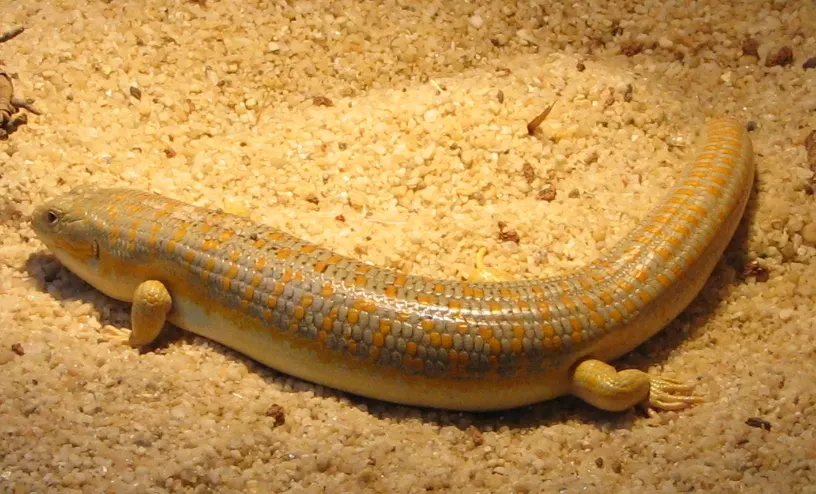
Schneider's skinks, Eumeces schneiderii, are the heavy-bodied, orange-speckled skinks from North Africa and the Middle East. Adults are about 12 to 16 inches. They often live 15 to 20 years, and care is intermediate. They dig, they bask, and they will investigate a keeper who shows up with food. The curiosity is real. It is not a reason to house them in a bare ten-gallon.
Give a 40-gallon or larger tank, several inches of sandy soil, a basking surface that reaches the hot end of an 80 to 100°F gradient, and a cool retreat. Humidity of 40 to 50 percent is the air. A sealed moist hide is the burrow they use to shed. UVB belongs over the basking spot. Insects are the main diet, with occasional fruit for individuals that want it. Calcium on the insects. One skink per tank unless you are set up to separate them.
Captive-bred and well fed, not fat
Imports arrive dehydrated and wild. Captive-bred juveniles take handling better and still need tongs at feeding time. A skink that is round like a sausage is overfed. A skink whose hips suddenly show is underfed or ill. Offer food, watch the body, and keep the lid locked. They push.
Repeated bad sheds or a refusal to eat in a warm tank is a vet visit. Find a clinic at ARAV.
Schneider's skink questions
Are Schneider's skinks friendly?
They are active and inquisitive. Many captive-bred animals learn that a hand means food. They are still fast, and they bite fingers that smell like insects.
What temperatures do they need?
Give them a gradient of about 80 to 100°F, a hot basking spot, and a cooler side they can choose.
Do they need high humidity?
A fair range is 40 to 50 percent. They still use a moist burrow. Wet walls and a soaked floor cause scale problems.
Decision Guides for Schneider's Skink
Use these only when comparing food, insurance, ownership budget, or beginner fit for this specific pet.