Giant Day Gecko
This page is educational reference material for preparing questions. A licensed veterinarian examines the animal, makes the diagnosis, and sets the treatment.
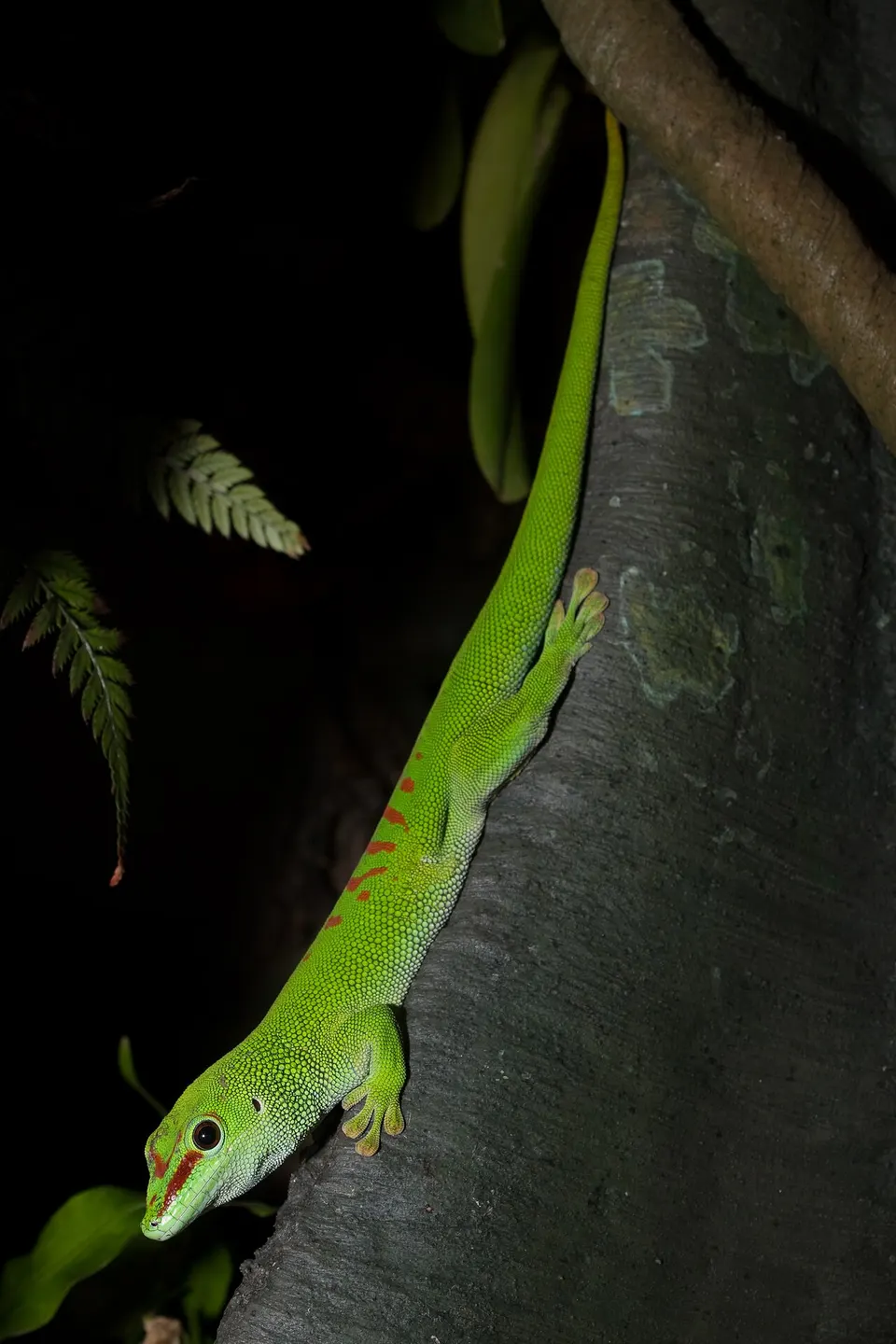
Quick Facts
| Attribute | Details |
|---|---|
| Scientific Name | Phelsuma grandis |
| Origin | Madagascar |
| Size | 9-12 inches (23-30 cm) |
| Lifespan | 10-20 years |
| Temperature | 80-88°F (27-31°C) |
| Humidity | 50-80% |
| Enclosure | 24x18x36" minimum (vertical) |
| Care Level | Intermediate |
| Diet | Omnivore (insects + fruit/nectar) |
| Temperament | Skittish, display animal, fragile skin |
Recommended for Giant Day Geckos
Affiliate links may earn a commission. Affiliate disclosure.
Pangea Gecko Diet - Complete fruit mix | Josh's Frogs - Bioactive & plants | Reptile Supply - Vertical enclosures
The big green Phelsuma
Giant day geckos are Phelsuma grandis from northern Madagascar. Adults reach about 9 to 12 inches. They commonly reach 10 to 20 years, and care is intermediate. They are a display animal. They are also skittish, and the skin is fragile. That is the care instruction: build the tank, then leave the lizard in it.
Start with a cage of 24 by 18 by 36 inches, vertical. Taller, with bamboo and plants, is better. Give them 80 to 88°F, a warmer basking spot, and humidity that moves between about 50 and 80 percent. UVB is required. The diet is insects plus fruit or a commercial gecko diet. Dust calcium. One male per enclosure. Females may fight too if the tank is bare.
Captive-bred color, intact skin
Move them by coaxing into a container. A grip that seems gentle still strips skin. Captive-bred animals are available and are the ones to buy. Imported adults often arrive thin and remain wild. A tight lid matters. These geckos are fast, and a living-room rescue ends in an injured animal behind a bookshelf.
Metabolic bone disease shows up as a wavy spine or a gecko that cannot climb. That is late. Prevention is the lamp and the calcium. Treatment is a reptile vet from ARAV.
Giant day gecko questions
How big do giant day geckos get?
About 9 to 12 inches, tail included. Buy the adult cage first: at least 24 by 18 by 36 inches, and vertical.
Why can't I handle them?
The skin tears. They are a skittish display animal with fragile skin. Enjoy the color through the glass.
What do they eat?
Insects and fruit or a prepared nectar diet. Calcium and UVB go with every week of that menu.
Decision Guides for Giant Day Gecko
Use these only when comparing food, insurance, ownership budget, or beginner fit for this specific pet.