Foxface Rabbitfish
This page is educational reference material for preparing questions. A licensed veterinarian examines the animal, makes the diagnosis, and sets the treatment.
Quick Facts
| Attribute | Details |
|---|---|
| Type | Saltwater / Marine |
| Size | Medium (8-10 in) |
| Lifespan | 5-7 years |
| Temperature | 72-82°F |
| Salinity | 1.020-1.025 sg |
| Min Tank Size | 75 gallon |
| Care Level | Intermediate |
| Diet | Herbivore: nori, algae, spirulina, blanched vegetables |
| Temperament | Peaceful, Algae grazer |
| Reef Safe | With caution (may nip soft corals) |
| Origin | Western Pacific |
| Typical Cost | $30-$60; $300-$500 setup |
Recommended for Marine Aquariums
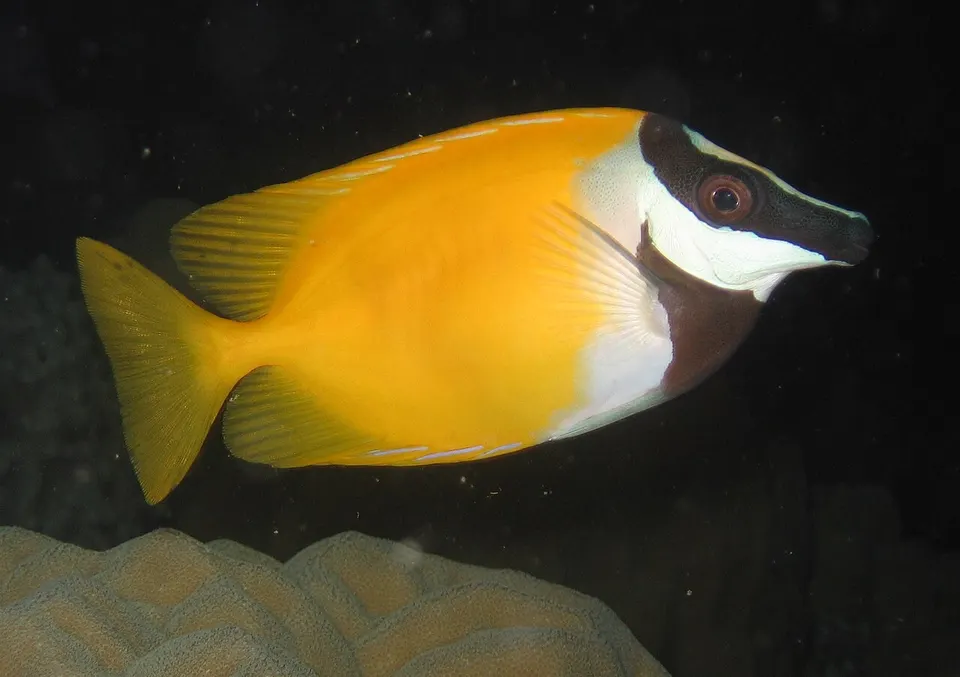
Siganus vulpinus, the foxface rabbitfish, is a western Pacific herbivore that reaches about 8 to 10 inches and lives 5 to 7 years. An 8-to-10-inch foxface needs 75 gallons of length to cruise. Intermediate care includes the venom as much as the algae. Temperament is peaceful, with the job description of an algae grazer, and reef safe is listed with caution because it may nip soft corals. The price is about 30 to 60 dollars and the setup about 300 to 500. The fact that should come before the algae praise is the venom. The dorsal, anal, and pelvic spines can puncture a hand. A sting is painful and it happens when a fish is netted, bagged, or trapped against the glass.
Foxface Rabbitfish Overview
The Foxface Rabbitfish is a medium (8-10 in) saltwater species originating from the Western Pacific. Known for being peaceful, algae grazer, this species is rated intermediate care level, making it well-suited for hobbyists with some marine aquarium experience.
Excellent algae control; venomous dorsal spines cause intense pain (handle with extreme caution); can rapidly change color when stressed from bright yellow to mottled brown
Foxface Rabbitfish baseline welfare rests on three habits: stable chemistry, measured feeding, and disciplined quarantine of new arrivals; these factors drive outcomes more than brand-name products.
Handle a foxface with a container, not a loose net and a squeeze. Do not put your hand into a cave it has entered. The venom is a defense, and a calm fish in the open is not a tame fish when it is cornered. Tell anyone who maintains the tank. Intermediate care includes that respect, plus a 75-gallon swimming tank. They are active grazers and they need length. A tall tank that is short from front to back turns an 8-inch rabbitfish into a pacing animal.
They eat hair algae, and they also eat some coral. Nori on a clip, spirulina, algae pellets, and blanched vegetables should be in the tank every day so the soft corals are not the salad. The caution is real. A foxface that ignores LPS for months can still strip a leather or a zoanthid patch when it is hungry or when the nori runs out. Peaceful applies to fish. It does not apply to every sessile invertebrate, and it does not apply to your hand.
From a water chemistry perspective, maintaining a saltwater aquarium for Foxface Rabbitfish demands consistent attention to parameters including temperature (72-82°F), pH (8.1-8.4), and tank capacity (minimum 30 gallons). These parameters are not merely guidelines—they represent the range within which Foxface Rabbitfish's metabolic processes, immune function, and reproductive behaviors operate optimally. Successful Foxface Rabbitfish keeping therefore requires not just the right equipment, but a disciplined approach to monitoring and maintaining water quality over the long term.
Temperament & Compatibility
The Foxface Rabbitfish is described as peaceful, algae grazer and is considered reef safe with caution monitor closely in reef tanks as individual specimens may develop coral-nipping behavior.
- Compatible tankmates: Other peaceful community fish of similar size. Avoid keeping with aggressive or highly territorial species.
- Stocking density: Marine fish require more space per individual than freshwater fish. The 75 gallon minimum is for this species alone increase tank size for community setups.
Keep the swimming tank at 72 to 82°F, salinity 1.020 to 1.025, and pH 8.1 to 8.4. Nitrate under 10 ppm on a reef and under 20 ppm in a fish-only system. Alkalinity 8 to 12 dKH, calcium 380 to 450 ppm, and magnesium 1250 to 1350 ppm are the reef numbers you are spending effort on if corals are present to be nipped. Ammonia and nitrite at 0 ppm matter because a rabbitfish eats a large volume of greens and produces the waste of a herbivore that size. One fish per tank is the usual limit unless the system is huge. They can squabble with their own kind in 75 gallons.
Feed the vegetables even after the hair algae is gone. A foxface that cleaned the rocks and then wasted away was never given a replacement diet. The 5-to-7-year lifespan fits a 75-gallon tank, daily herbivore food, and a keeper who does not learn about the spines during a panicked netting. If the reef cannot lose a soft coral, this is a grazer for a different system. The venom does not fade because the fish is useful.
Tank Specifications
- Minimum size: 75 gallon. Larger is strongly recommended for parameter stability.
- Sump systems recommended for tanks over 50 gallons.
- Water flow: Moderate to strong flow using powerheads or wavemakers. Provide areas of both higher and lower flow within the tank.
- Lighting: Standard marine lighting adequate for fish-only systems.
- Aquascaping: Live rock providing caves, overhangs, and swim-through passages. Ensure open swimming space for active species.
Water Parameters
| Parameter | Ideal Range |
|---|---|
| Temperature | 72-82°F |
| Salinity | 1.020-1.025 sg |
| pH | 8.1-8.4 |
| Ammonia | 0 ppm |
| Nitrite | 0 ppm |
| Nitrate | <10 ppm (reef), <20 ppm (FOWLR) |
| Alkalinity | 8-12 dKH |
| Calcium | 380-450 ppm |
| Magnesium | 1250-1350 ppm |
Critical: Cycle Your Tank First
Marine Tank Essentials
Diet & Nutrition
The Foxface Rabbitfish is classified as herbivore. Proper nutrition is essential for maintaining health, coloration, and immune function.
- Primary diet: Herbivore: nori, algae, spirulina, blanched vegetables.
- Feeding frequency: 2-3 small feedings per day. Small frequent meals are better than one large feeding.
- Variety: Rotate between different food types to ensure complete nutrition. Offer nori sheets, spirulina-enriched foods, and blanched vegetables.
- Avoid: Overfeeding is the most common feeding mistake.
Proper nutrition for Foxface Rabbitfish requires understanding not just what to feed, but how feeding strategies affect health, behavior, and water quality. A disciplined approach to feeding, where your Foxface Rabbitfish receives the right amount of appropriate food at consistent intervals, is one of the most impactful things you can do for both the fish and the overall aquarium ecosystem.
Diet variety is essential for optimal Foxface Rabbitfish health because no single commercial food provides the complete nutritional profile these marine fish require. Observing your Foxface Rabbitfish's response to different food types also provides useful health information, as reduced interest in normally preferred foods is often an early indicator of illness.
Common Health Issues
The most common health concerns for Foxface Rabbitfishs include:
- Venomous spine injuries to owner: Venomous spine injuries to owner.
- marine ich: marine ich.
- HLLE: HLLE.
- bacterial infections: bacterial infections.
Disease Emergency Response
When the foundation is sound, nutrition and activity and everything else line up without being engineered
Use vetted best practices as the starting default and iterate when your observations push you to.
Breed origin shapes several practical defaults: calorie density, exercise tolerance, environmental preferences. Plans that respect these origins outperform plans that ignore them.
Grooming & Maintenance
- Equipment maintenance: Clean protein skimmer cup 2-3 times weekly. Replace filter media monthly. Calibrate refractometer regularly.
- Algae management: Magnetic algae scrapers for glass cleaning. Clean-up crew (snails, hermit crabs) helps control nuisance algae.
- Water testing: Test salinity, pH, ammonia, nitrite, and nitrate weekly. Test alkalinity, calcium, and magnesium for reef systems.
Cost Overview
| Expense Category | Estimated Cost |
|---|---|
| Fish Purchase | $30-$60 |
| Tank & Equipment Setup | $300-$500 setup |
| Live Rock & Sand | $100-$300 |
| Salt Mix (annual) | $100-$200 |
| Food (annual) | $150-$300 |
| Electricity (annual) | $200-$500 |
| Water Testing Supplies | $50-$100/year |
| Replacement Equipment | $100-$300/year |
The true cost of keeping Foxface Rabbitfish extends well beyond the initial purchase price and basic equipment. Many aspiring Foxface Rabbitfish keepers underestimate these ongoing costs, which can lead to cut corners that ultimately compromise fish health and result in even greater expenses. A realistic budget that accounts for both routine maintenance and occasional replacement of equipment provides a more accurate picture of what Foxface Rabbitfish keeping actually costs.
Small adjustments based on what you observe often yield the biggest improvements.
Insurance Considerations
Quick Answers About Foxface Rabbitfish
Every Foxface Rabbitfish benefits from an owner willing to dig below surface-level recommendations.
Is the Foxface Rabbitfish reef safe?
The Foxface Rabbitfish is rated: With caution (may nip soft corals). Reef compatibility can vary between individual specimens. Providing adequate feeding can reduce the likelihood of fish picking at corals.
How big of a tank does a Foxface Rabbitfish need?
The Foxface Rabbitfish requires a minimum tank size of 75 gallon. Larger tanks provide more stable water parameters and reduce territorial aggression. Consider future fish additions when sizing your tank.
What do Foxface Rabbitfishs eat?
Foxface Rabbitfishs are classified as herbivore. Feed nori, algae, spirulina, blanched vegetables. Variety is essential for complete nutrition and maintaining vibrant coloration. Consider using an automatic feeder for consistency.
Are Foxface Rabbitfishs good for beginners?
Foxface Rabbitfishs are rated intermediate care level. They require some experience with saltwater aquariums and stable, established systems. Understanding water chemistry, proper acclimation, and disease prevention is important.
How long do Foxface Rabbitfishs live?
Foxface Rabbitfishs live 5-7 years in captivity with proper care.
Related Marine Species
People often underestimate how much this piece of a Foxface Rabbitfish's routine influences later health outcomes.
Ocellaris Clownfish
Beginner care level Min 20 gallon
Blue Tang (Regal Tang)
Advanced care level Min 180 gallon
Yellow Tang
Intermediate care level Min 100 gallon
Coral Beauty Angelfish
Intermediate care level Min 70 gallon
View all marine fish species →
Ask Our AI About Foxface Rabbitfishs
Have questions about Foxface Rabbitfish care, tank setup, or compatibility? Our AI assistant provides personalized guidance for saltwater aquarists.
Decision Guides for Foxface Rabbitfish
Use these only when comparing food, insurance, ownership budget, or beginner fit for this specific pet.
Is Foxface Rabbitfish Right for Your Aquarium?
A reef keeper who wants Siganus vulpinus to graze algae and will respect the venomous spines Someone with about 75 gallons or more, a lid, and seaweed in the diet An aquarist who uses a container, not a bare hand, when moving the fish A caregiver who nets foxfaces casually. The dorsal spines are venomous A small tank or a second rabbitfish Anyone who wanted a tang and was sold a foxface as the same job without the warning
Foxface Rabbitfish May Be Great For:
- A reef keeper who wants Siganus vulpinus to graze algae and will respect the venomous spines
- Someone with about 75 gallons or more, a lid, and seaweed in the diet
- An aquarist who uses a container, not a bare hand, when moving the fish
Foxface Rabbitfish May Not Be Ideal For:
- A caregiver who nets foxfaces casually. The dorsal spines are venomous
- A small tank or a second rabbitfish
- Anyone who wanted a tang and was sold a foxface as the same job without the warning
Keeping a Foxface Rabbitfish is one of those experiences that gets better with time. The first few weeks involve a steep learning curve, but once you establish a routine, the daily care becomes second nature. Most long-term Foxface Rabbitfish keepers say they wish they had started sooner.
Siganus foxface rabbitfish graze algae all day and carry venomous spines. A long marine tank, dried seaweed on a clip, and care with the net are the practical requirements. They can pale and hide when stressed, then color up again once they are eating. Quarantine a new foxface. The spines are a hospital visit if they puncture a hand.