Firefish Goby
Quick Facts
| Attribute | Details |
|---|---|
| Type | Saltwater / Marine |
| Size | Small (3 in) |
| Lifespan | 3-5 years |
| Temperature | 72-80°F |
| Salinity | 1.020-1.025 sg |
| Min Tank Size | 20 gallon |
| Care Level | Beginner |
| Diet | Carnivore: mysis, brine shrimp, finely chopped seafood |
| Temperament | Peaceful, Timid, Hovering |
| Reef Safe | Yes |
| Origin | Indo-Pacific |
| Typical Cost | $15-$30; $200-$400 setup |
Recommended for Marine Aquariums
For Firefish Goby, the most reliable results come from parameter consistency, species-matched diet rotation, and early correction of stress signals.
Firefish Goby Overview
The Firefish Goby is a small (3 in) saltwater species originating from the Indo-Pacific. Known for being peaceful, timid, hovering, this species is rated beginner care level, making it an excellent choice for aquarists new to saltwater keeping. With a lifespan of 3-5 years, this is a rewarding species that can be enjoyed for many years with proper care.
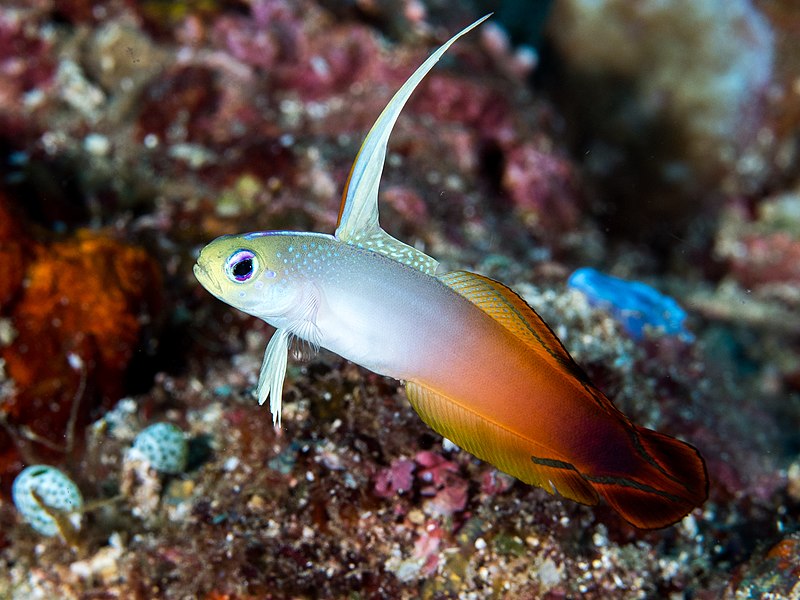
Hovers motionlessly in water column facing current; darts into rockwork burrow when startled; elongated first dorsal ray used for signaling; stunning gradient coloration from white to red
A care programme built around these traits routinely outperforms a generic template because the inputs are already closer to the animal's real requirements.
Firefish Goby long-term welfare responds more to maintenance rhythm and species-appropriate stocking than to any single product choice rather than copied from general fish templates.
The Firefish Goby's behavioral repertoire extends well beyond what casual observers might expect. These marine fish exhibit complex social hierarchies, territorial behaviors, and feeding strategies that become increasingly apparent in well-maintained saltwater aquarium environments. Their peaceful, timid, hovering disposition means that tank mate selection requires careful consideration—not all community fish are compatible, and individual personality variation means that even within the same species, behavioral differences can be significant. Keepers who invest time in observing their Firefish Goby's natural behaviors are better equipped to identify stress indicators, illness onset, and social conflict before these issues escalate into serious problems.
From a water chemistry perspective, maintaining a saltwater aquarium for Firefish Goby demands consistent attention to parameters including temperature (72-80°F), pH (8.1-8.4), and tank capacity (minimum 30 gallons). These parameters are not merely guidelines—they represent the range within which Firefish Goby's metabolic processes, immune function, and reproductive behaviors operate optimally. Deviations outside these ranges, even temporary ones, can trigger stress responses that compromise immune function and increase susceptibility to common aquatic diseases. Successful Firefish Goby keeping therefore requires not just the right equipment, but a disciplined approach to monitoring and maintaining water quality over the long term.
Temperament & Compatibility
The Firefish Goby is described as peaceful, timid, hovering and is considered reef safe, making it compatible with coral-dominated aquariums.
- Compatible tankmates: Other peaceful community fish of similar size. Avoid keeping with aggressive or highly territorial species.
- Avoid housing with: Large aggressive species, highly territorial fish, or anything large enough to eat them.
- Stocking density: Marine fish require more space per individual than freshwater fish. The 20 gallon minimum is for this species alone — increase tank size for community setups.
The behavioral complexity of Firefish Goby is often underestimated by those new to the aquarium hobby. While aquarium fish are sometimes perceived as passive decorative elements, Firefish Goby display a rich repertoire of social behaviors, territorial strategies, and environmental interactions that become increasingly fascinating to observe over time. Their peaceful, timid, hovering disposition provides a general framework for predicting behavior, but individual variation is significant—experienced keepers learn to read the subtle body language cues, color changes, and swimming patterns that indicate mood, stress level, and social status within the tank hierarchy.
Skipping these details early usually reappears as bill-shock later; including them up front keeps things calm
Tank Setup & Requirements
A clear picture of this side of Firefish care puts you in a better position to make decisions the animal can actually feel. Count on a short adjustment period, a Firefish tends to signal clearly when something fits and when it does not.
Tank Specifications
- Minimum size: 20 gallon. Larger is strongly recommended for parameter stability.
- Filtration: Protein skimmer (essential for marine systems), live rock for biological filtration, and mechanical filtration. Sump systems recommended for tanks over 50 gallons.
- Water flow: Moderate to strong flow using powerheads or wavemakers. Provide areas of both higher and lower flow within the tank.
- Lighting: Full-spectrum reef lighting if keeping with corals. LED systems offer energy efficiency and controllable spectrum.
- Aquascaping: Live rock providing caves, overhangs, and swim-through passages. Ensure open swimming space for active species.
Water Parameters
| Parameter | Ideal Range |
|---|---|
| Temperature | 72-80°F |
| Salinity | 1.020-1.025 sg |
| pH | 8.1-8.4 |
| Ammonia | 0 ppm |
| Nitrite | 0 ppm |
| Nitrate | <10 ppm (reef), <20 ppm (FOWLR) |
| Alkalinity | 8-12 dKH |
| Calcium | 380-450 ppm |
| Magnesium | 1250-1350 ppm |
Critical: Cycle Your Tank First
Firefish Goby consistent chemistry, controlled feeding, and deliberate quarantine sit at the centre of sustained aquatic welfare; these factors drive outcomes more than brand-name products.
Marine Tank Essentials
Real-world outcomes trace back to consistency and attention to situational detail more than to any specific recommendation here. Small adjustments based on what you observe often yield the biggest improvements.
Diet & Nutrition
The Firefish Goby is classified as carnivore. Proper nutrition is essential for maintaining health, coloration, and immune function.
- Primary diet: Carnivore: mysis, brine shrimp, finely chopped seafood.
- Feeding frequency: 2-3 small feedings per day. Small frequent meals are better than one large feeding.
- Variety: Rotate between different food types to ensure complete nutrition. Offer frozen mysis shrimp, brine shrimp, and high-quality pellets.
- Supplements: Vitamin-enriched foods or vitamin soaking solutions (like Selcon) boost immune function and enhance coloration.
- Avoid: Overfeeding is the most common feeding mistake. Excess food decays and degrades water quality, which is particularly dangerous in saltwater systems.
Proper nutrition for Firefish Goby requires understanding not just what to feed, but how feeding strategies affect health, behavior, and water quality. In the enclosed ecosystem of a saltwater aquarium, every uneaten food particle and every waste product contributes to the biological load that your filtration system must process. Overfeeding—the most common nutritional mistake in fishkeeping—degrades water quality, promotes algae growth, and can directly cause health problems including fatty liver disease and swim bladder disorders. A disciplined approach to feeding, where your Firefish Goby receives the right amount of appropriate food at consistent intervals, is one of the most impactful things you can do for both the fish and the overall aquarium ecosystem.
Diet variety is essential for optimal Firefish Goby health because no single commercial food provides the complete nutritional profile these marine fish require. A rotation that includes high-quality prepared foods (pellets or flakes formulated for the species), supplemented with frozen or freeze-dried options and occasional live foods, provides the nutritional diversity that supports immune function, coloration, and natural behavior expression. Each food type offers different nutritional benefits—prepared foods provide balanced baseline nutrition, frozen foods offer natural protein sources, and live foods trigger natural hunting behaviors that provide valuable mental stimulation. Observing your Firefish Goby's response to different food types also provides useful health information, as reduced interest in normally preferred foods is often an early indicator of illness.
Common Health Issues
Understanding potential health problems helps marine aquarists recognize and respond to issues quickly. The most common health concerns for Firefish Gobys include.
- Jumping: Jumping (notorious jumpers).
- stress: stress from aggressive tankmates.
- marine ich: marine ich.
- bacterial infections: bacterial infections.
- starvation: starvation from being outcompeted for food.
Disease Emergency Response
Owners who align food, activity, and environment to the breed's developmental history consistently produce better long-term health than those who default to generic templates.
Keeping a Firefish healthy means prioritizing water quality above everything else. Most health problems in aquatic species trace back to suboptimal water parameters, and by the time visible symptoms appear, the problem is often well advanced. Consistent water testing and maintenance isn't just helpful — it's the single most effective health strategy you have.
Published guidelines get you most of the way; the last mile is paying attention to how your specific animal responds.
Default to best practice, monitor outcomes, and steer based on what you actually observe.
Grooming & Maintenance
- Water changes: 10-20% weekly using properly mixed saltwater (mix 24 hours ahead, match temperature and salinity).
- Equipment maintenance: Clean protein skimmer cup 2-3 times weekly. Replace filter media monthly. Calibrate refractometer regularly.
- Algae management: Magnetic algae scrapers for glass cleaning. Clean-up crew (snails, hermit crabs) helps control nuisance algae.
- Water testing: Test salinity, pH, ammonia, nitrite, and nitrate weekly. Test alkalinity, calcium, and magnesium for reef systems.
Cost Overview
| Expense Category | Estimated Cost |
|---|---|
| Fish Purchase | $15-$30 |
| Tank & Equipment Setup | $200-$400 setup |
| Live Rock & Sand | $100-$300 |
| Salt Mix (annual) | $100-$200 |
| Food (annual) | $150-$300 |
| Electricity (annual) | $200-$500 |
| Water Testing Supplies | $50-$100/year |
| Replacement Equipment | $100-$300/year |
The true cost of keeping Firefish Goby extends well beyond the initial purchase price and basic equipment. While the upfront investment in a properly equipped saltwater aquarium (minimum 30 gallons) represents a significant portion of the total cost, ongoing expenses for water treatment chemicals, filter media, electricity for heating and lighting, and food constitute the majority of long-term spending. Many aspiring Firefish Goby keepers underestimate these ongoing costs, which can lead to cut corners that ultimately compromise fish health and result in even greater expenses. A realistic budget that accounts for both routine maintenance and occasional replacement of equipment provides a more accurate picture of what Firefish Goby keeping actually costs.
Success here comes from steady observation and a readiness to make small adjustments when the results suggest a change is needed.
Plan on a few weeks of intentional practice to set the habits here; the durability of the outcome is worth the upfront investment.
Insurance Considerations
Work on the simple inputs first and let your own observations tell you where to add nuance.
Is the Firefish Goby reef safe?
The Firefish Goby is rated: Yes. Reef compatibility can vary between individual specimens. Monitor closely when first introducing to a reef tank, and be prepared to relocate the fish if it develops problematic behaviors like coral nipping. Providing adequate feeding can reduce the likelihood of fish picking at corals.
How big of a tank does a Firefish Goby need?
The Firefish Goby requires a minimum tank size of 20 gallon. Larger tanks provide more stable water parameters and reduce territorial aggression. For saltwater aquariums, stability is more important than hitting exact parameters, and larger water volumes resist parameter swings more effectively. Consider future fish additions when sizing your tank.
What do Firefish Gobys eat?
Firefish Gobys are classified as carnivore. Feed mysis, brine shrimp, finely chopped seafood. Feed 2-3 times daily in small amounts that can be consumed within 2-3 minutes. Variety is essential for complete nutrition and maintaining vibrant coloration. Consider using an automatic feeder for consistency.
Are Firefish Gobys good for beginners?
Firefish Gobys are rated beginner care level. They are among the best fish for newcomers to saltwater aquariums, offering hardiness and forgiving nature while you learn the intricacies of marine water chemistry.
How long do Firefish Gobys live?
Firefish Gobys live 3-5 years in captivity with proper care. Achieving maximum lifespan requires excellent water quality (ammonia and nitrite 0ppm, nitrate under 10ppm), stable salinity of 1.020-1.025 sg, appropriate tank size, and a varied nutritious diet. Stress reduction through proper tankmate selection and adequate hiding spaces also contributes significantly to longevity.
Related Marine Species
Narrow, breed-aware detail beats broad pet-care platitudes in nearly every scenario owners actually face.
Ocellaris Clownfish
Beginner care level • Min 20 gallon
Blue Tang (Regal Tang)
Advanced care level • Min 180 gallon
Yellow Tang
Intermediate care level • Min 100 gallon
Coral Beauty Angelfish
Intermediate care level • Min 70 gallon
View all marine fish species →
Ask Our AI About Firefish Gobys
Have questions about Firefish Goby care, tank setup, or compatibility? Our AI assistant provides personalized guidance for saltwater aquarists.
Decision Guides for Firefish Goby
Use these only when comparing food, insurance, ownership budget, or beginner fit for this specific pet.
Is Firefish Goby Right for Your Aquarium?Aquarium
Firefish suitability depends on the specific balance of maintenance tolerance, handling interaction, and environmental complexity the household is prepared for. Low-maintenance species in well-set-up environments produce enjoyable ownership for most households. High-maintenance species with specific environmental requirements work well only for households genuinely engaged in that level of detail.
Firefish Goby May Be Great For:
- Keepers with appropriate experience and dedication
- Those who can commit to long-term care requirements
- Enthusiasts interested in this species's unique characteristics
Firefish Goby May Not Be Ideal For:
- Those seeking a very low-maintenance pet
- Keepers who cannot commit to consistent reef compatibility, water chemistry, and quarantine protocols
- Those with limited space or budget for proper setup
The best way to know if a Firefish Goby is right for you is to spend time around one before committing. Visit a breeder, a rescue, or a fellow keeper. The firsthand experience of care routines, feeding, and habitat maintenance tells you more than any guide can. If it still feels right after that, you are probably ready.