Fairy Wrasse
This page is educational reference material for preparing questions. A licensed veterinarian examines the animal, makes the diagnosis, and sets the treatment.
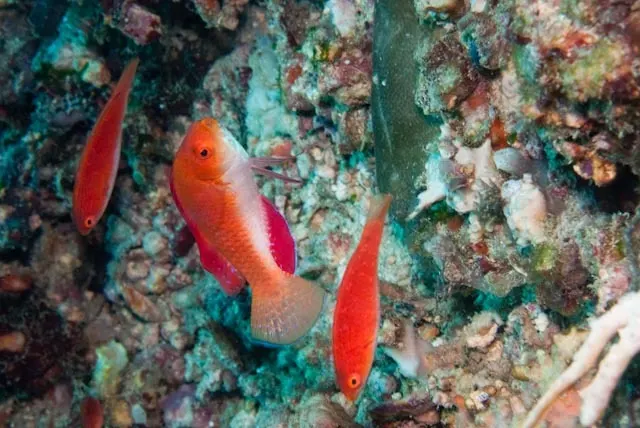
Quick Facts
| Attribute | Details |
|---|---|
| Type | Saltwater / Marine |
| Size | Small (3-5 in) |
| Lifespan | 5-8 years |
| Temperature | 72-78°F |
| Salinity | 1.020-1.025 sg |
| Min Tank Size | 55 gallon |
| Care Level | Intermediate |
| Diet | Carnivore: mysis, brine shrimp, copepods, pellets |
| Temperament | Peaceful, Active swimmer |
| Reef Safe | Yes |
| Origin | Indo-Pacific |
| Typical Cost | $30-$100 depending on species; $300-$500 setup |
Recommended for Marine Aquariums
Fairy Wrasse Overview
The Fairy Wrasse is a small (3-5 in) saltwater species originating from the Indo-Pacific. Known for being peaceful, active swimmer, this species is rated intermediate care level, making it well-suited for hobbyists with some marine aquarium experience. With a lifespan of 5-8 years, this is a rewarding species that can be enjoyed for many years with proper care.
Males display incredibly vibrant coloring during courtship displays (nuptial flashing); numerous species available in the hobby; peaceful reef inhabitants
Fairy wrasses are the small, colorful Cirrhilabrus and their close allies, listed here as a group rather than one species. Adults run about 3 to 5 inches and live 5 to 8 years. Fairy wrasses need 55 gallons of open water above the rock. Intermediate care comes from the lid and the repeated small feedings. They are peaceful, active swimmers, and reef safe. The diet is carnivore: mysis, brine shrimp, copepods, and pellets. Cost depends on the species, roughly 30 to 100 dollars, with a setup around 300 to 500. A rare male is not a different care category. He is a more expensive fish with the same need to eat and the same need for a lid.
Fairy wrasses, genus Cirrhilabrus, are peaceful zooplanktivores. Keep one male. A second male of the same or a similar species is often harassed until it hides and starves. Females can share the tank if it is large and broken up by rock. They flash their fins at dusk and sleep in a mucus cocoon, sometimes buried in sand or tucked in rock. That cocoon is why a rough netting can injure them. They are a poor mix with hungry dottybacks, large wrasses, and hawkfish that treat a small colorful fish as food.
Hold a fairy wrasse at 72-78°F, specific gravity about 1.024 to 1.026, and pH 8.1-8.4, in a tank that has finished cycling. The overview on this page asks for 55 gallons because these fish need open swimming room above the rock, not a 20-gallon nano with a powerhead blasting the water. They eat from the water column. A bare new reef with no copepods and one feeding a day is how a thin fairy wrasse dies in the first month. Quarantine in a covered tank. Marine ich and flukes arrive with the fish, and a jump during a freshwater dip is a known way to lose one. Older template lines on this page say a minimum 30 gallons. The tank answer here is 55 gallons, and that is the number to use.
Temperament & Compatibility
The Fairy Wrasse is described as peaceful, active swimmer and is considered reef safe, making it compatible with coral-dominated aquariums.
- Compatible tankmates: Other peaceful community fish of similar size. Avoid keeping with aggressive or highly territorial species.
- Stocking density: Marine fish require more space per individual than freshwater fish. The 55 gallon minimum is for this species alone increase tank size for community setups.
Males flash at each other and at females, shooting color across the body when they display. That display needs open water above the rock, which is why 55 gallons of length matters more than a tall cube of the same volume. One male with females, or a single fish, is the peaceful version. Two adult males of the same species in 55 gallons will display until it becomes harassment. Know the sex and the species before you add a second.
They jump. A fairy wrasse can leave through a small feeding hole when the lights switch or when a male is chased. Cover the tank completely, including gaps around plumbing. They also need to eat small foods several times a day in a busy reef, because they are not the fish that wins a single feeding against a tang. Mysis, enriched brine, and pellets they recognize are the staple. Copepods on the rock are a supplement, not a plan, unless the tank is mature and the wrasse is one of the smaller species.
Temperature on this card is 72 to 78°F, slightly cooler at the top end than a general 82°F reef recipe. Hold the salt between 1.020 and 1.025 for these swimmers. The pH window for a fairy wrasse tank is 8.1 to 8.4. A reef should keep nitrate under 10 ppm, while a fish-only system can allow under 20 ppm. Ammonia and nitrite at 0 ppm, alkalinity at 8 to 12 dKH, calcium at 380 to 450 ppm, and magnesium at 1250 to 1350 ppm round out a tank that may also hold corals. Intermediate care is the lid, the feeding frequency, and the choice of one male.
Reef safe here means they do not graze coral the way an angel does. They may still eat tiny mobile invertebrates. A reef of SPS and LPS with a fairy wrasse is a standard combination. A tank built around a rare copepod-dependent fish may not want the extra hunter. The 5-to-8-year lifespan fits a covered 55-gallon tank and a fish that was eating before you bought it. A male that fades and hides is usually a second male, a missing lid, or a feeding plan that never reaches him.
Accounting for these specifics from day one saves the corrective rework that shows up when they are discovered later
Tank Setup & Requirements
Most households underestimate the compounding value of handling this steadily rather than when it becomes urgent.
Tank Specifications
- Minimum size: 55 gallon. Larger is strongly recommended for parameter stability.
- Sump systems recommended for tanks over 50 gallons.
- Water flow: Moderate to strong flow using powerheads or wavemakers. Active swimmers appreciate strong linear flow.
- Lighting: Full-spectrum reef lighting if keeping with corals. LED systems offer energy efficiency and controllable spectrum.
- Aquascaping: Live rock providing caves, overhangs, and swim-through passages. Ensure open swimming space for active species.
Water Parameters
| Parameter | Ideal Range |
|---|---|
| Temperature | 72-78°F |
| Salinity | 1.020-1.025 sg |
| pH | 8.1-8.4 |
| Ammonia | 0 ppm |
| Nitrite | 0 ppm |
| Nitrate | <10 ppm (reef), <20 ppm (FOWLR) |
| Alkalinity | 8-12 dKH |
| Calcium | 380-450 ppm |
| Magnesium | 1250-1350 ppm |
Critical: Cycle Your Tank First
Quarantine a fairy wrasse in a lidded tank before it meets corals or other fish. Observe appetite. A fish that will not eat frozen mysis after a few days is not ready for the display. Treat flukes and external parasites in quarantine, not in the reef, and keep the quarantine tank covered the entire time.
Marine Tank Essentials
Let the breed's documented traits inform the structure and the individual animal's behaviour inform the fine adjustments — that combination outperforms either in isolation.
Diet & Nutrition
The Fairy Wrasse is classified as carnivore. Proper nutrition is essential for maintaining health, coloration, and immune function.
- Primary diet: Carnivore: mysis, brine shrimp, copepods, pellets.
- Feeding frequency: 2-3 small feedings per day. Small frequent meals are better than one large feeding.
- Variety: Rotate between different food types to ensure complete nutrition. Offer frozen mysis shrimp, brine shrimp, and high-quality pellets.
- Avoid: Overfeeding is the most common feeding mistake.
Proper nutrition for Fairy Wrasse requires understanding not just what to feed, but how feeding strategies affect health, behavior, and water quality. A disciplined approach to feeding, where your Fairy Wrasse receives the right amount of appropriate food at consistent intervals, is one of the most impactful things you can do for both the fish and the overall aquarium ecosystem.
Diet variety is essential for optimal Fairy Wrasse health because no single commercial food provides the complete nutritional profile these marine fish require. Observing your Fairy Wrasse's response to different food types also provides useful health information, as reduced interest in normally preferred foods is often an early indicator of illness.
Common Health Issues
The most common health concerns for Fairy Wrasses include:
- Marine ich: Marine ich.
- stress: stress from aggressive tankmates.
- jumping: jumping (tight-fitting lid essential).
- lymphocystis: lymphocystis.
Disease Emergency Response
Grooming & Maintenance
- Equipment maintenance: Clean protein skimmer cup 2-3 times weekly. Replace filter media monthly. Calibrate refractometer regularly.
- Algae management: Magnetic algae scrapers for glass cleaning. Clean-up crew (snails, hermit crabs) helps control nuisance algae.
- Water testing: Test salinity, pH, ammonia, nitrite, and nitrate weekly. Test alkalinity, calcium, and magnesium for reef systems.
Cost Overview
| Expense Category | Estimated Cost |
|---|---|
| Fish Purchase | $30-$100 depending on species |
| Tank & Equipment Setup | $300-$500 setup |
| Live Rock & Sand | $100-$300 |
| Salt Mix (annual) | $100-$200 |
| Food (annual) | $150-$300 |
| Electricity (annual) | $200-$500 |
| Water Testing Supplies | $50-$100/year |
| Replacement Equipment | $100-$300/year |
Budget past the purchase price. A fairy wrasse needs a tight lid or screen, a quarantine tank, salt mix, and frequent frozen mysis, enriched brine, and sometimes a copepod refill. The fish itself is often the cheap line on the receipt. Replacing a jumper that dried on the floor, or a second fish bought because the first was a thin male, costs more. Plan on an established reef, not a tank bought the same week as the fish.
Insurance Considerations
Fairy Wrasse Questions Owners Ask
Learn the dusk display and the mucus cocoon so you do not treat a sleeping fairy wrasse as a dying one. A fish lying in the sand at night can be asleep. A fish clamped, breathing fast, and ignoring food in the afternoon is not asleep. That second fish needs a vet or a hospital tank the same day, not another night of watching.
Is the Fairy Wrasse reef safe?
The Fairy Wrasse is rated: Yes. Reef compatibility can vary between individual specimens. Providing adequate feeding can reduce the likelihood of fish picking at corals.
How big of a tank does a Fairy Wrasse need?
The Fairy Wrasse requires a minimum tank size of 55 gallon. Larger tanks provide more stable water parameters and reduce territorial aggression. Consider future fish additions when sizing your tank.
What do Fairy Wrasses eat?
Fairy Wrasses are classified as carnivore. Feed mysis, brine shrimp, copepods, pellets. Variety is essential for complete nutrition and maintaining vibrant coloration. Consider using an automatic feeder for consistency.
Are Fairy Wrasses good for beginners?
Fairy Wrasses are rated intermediate care level. They require some experience with saltwater aquariums and stable, established systems. Understanding water chemistry, proper acclimation, and disease prevention is important.
How long do Fairy Wrasses live?
Fairy Wrasses live 5-8 years in captivity with proper care.
Related Marine Species
One male per tank. If the new fish is also a male, return it or move it. Do not wait for them to work it out. Feed small portions more than once a day. A single heavy feeding does not match how these fish pick plankton.
Ocellaris Clownfish
Beginner care level Min 20 gallon
Blue Tang (Regal Tang)
Advanced care level Min 180 gallon
Yellow Tang
Intermediate care level Min 100 gallon
Coral Beauty Angelfish
Intermediate care level Min 70 gallon
View all marine fish species →
Ask Our AI About Fairy Wrasses
Have questions about Fairy Wrasse care, tank setup, or compatibility? Our AI assistant provides personalized guidance for saltwater aquarists.
Decision Guides for Fairy Wrasse
Use these only when comparing food, insurance, ownership budget, or beginner fit for this specific pet.
Is Fairy Wrasse Right for Your Aquarium?
A fairy wrasse fits an established reef with a lid, rockwork, and a keeper who already quarantines new fish. It does not fit a brand-new cube, an uncovered lagoon, or a tank whose only plan for ich is a bottle poured into the display. Plan the adult size, the vet, and the daily work for the fairy wrasse before it comes home.
Fairy Wrasse May Be Great For:
- A keeper with a lidded, established reef and a quarantine tank, adding one male Cirrhilabrus and no second male
- Someone who will feed small meaty foods several times a day and keep copepods in the rockwork
- An aquarist who acclimates in a covered bucket, because fairy wrasses jump when startled
Fairy Wrasse May Not Be Ideal For:
- A new tank still cycling, or a tank with no lid and open overflow teeth
- A reef that already has a male fairy wrasse of a similar species
- Anyone who nets fish in the open, because a fairy wrasse can jump out during capture and the body is soft
Buy captive-raised when you can find them, acclimate under a cover, and feed the day you see the fish hunting the water column. A fairy wrasse that spends the first week at the surface against the lid is telling you the cover, the flow, or the tankmates are wrong. Plan the adult size, the vet, and the daily work for the fairy wrasse before it comes home.
Cirrhilabrus fairy wrasses are reef-safe leapers. Males flash colors in the open water over the rock, and they need a tight lid, a group or at least a pair in a long tank, and small meaty foods several times a day. They rest in a mucus cocoon at night. A gap in the lid is how a fairy wrasse leaves the tank.