Rummy-Nose Tetra
This page is educational reference material for preparing questions. A licensed veterinarian examines the animal, makes the diagnosis, and sets the treatment.
Affiliate links may earn a commission. Affiliate disclosure.
Quick Facts
| Attribute | Details |
|---|---|
| Type | Freshwater |
| Family | Characidae |
| Adult Size | 2 inches |
| Lifespan | 5-8 years |
| Tank Size | 20+ gallons |
| Temperament | Peaceful Schooling |
| Difficulty | Intermediate |
Rummy-Nose Tetra Overview
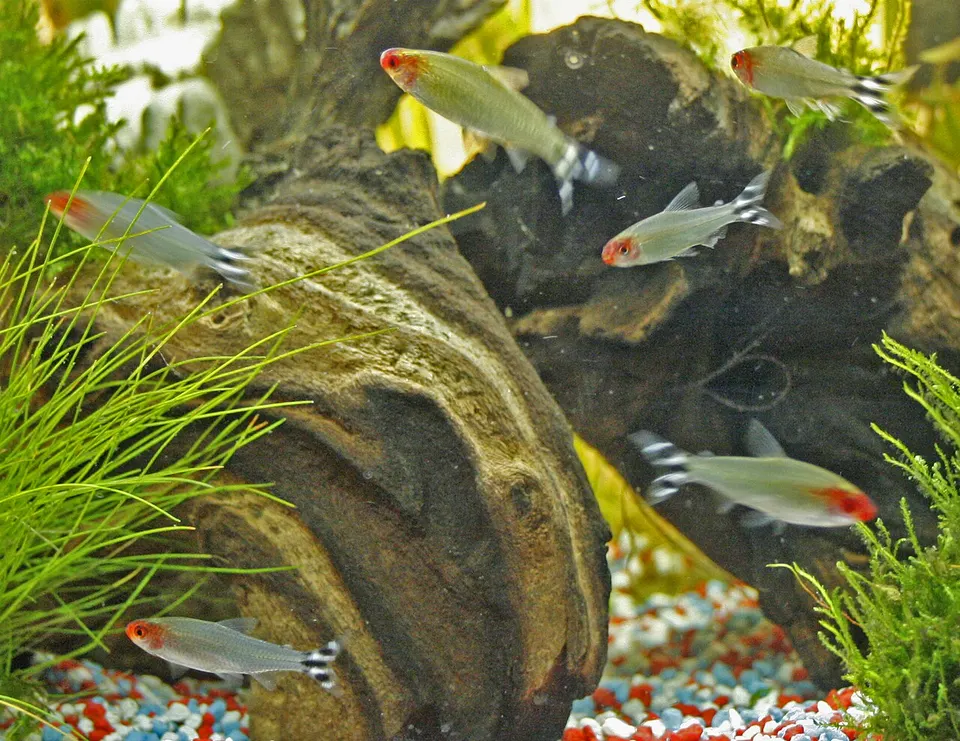
Rummy-nose tetras are small schooling characins, about 2 inches as adults, with a lifespan of 5 to 8 years. The tank minimum is 20 gallons. They are peaceful and the difficulty is intermediate. The common names and the science have shifted: fish sold as true rummy-nose are tied to Hemigrammus bleheri and to Petitella, and the red on the head is only worth buying if you keep a school. A pair in a 10-gallon tank never looks like the fish on the bag.
The nose is a water-quality gauge. When conditions slip, the red recedes and the head turns pale long before the fish is belly-up. That is more useful than a vague promise that they are sensitive. Keep ammonia and the rest of the nitrogen cycle in a place where the red stays intact, and do not wait for a test kit if an entire school washes out at once. Nitrate creep, a dirty filter, and a neglected water change show up on the face. The card rates them intermediate because that signal is real, not because they are aggressive.
Stock a proper school in the 20 gallons or more. Ten fish in a planted tank with open swimming room and a dark substrate show the red head and the black-and-white tail band. Three fish in a bright, empty tank go pale and hide. They are midwater swimmers. Leave the bottom to other animals and do not add them as dither fish for a cichlid that will eventually eat a 2-inch tetra. Peaceful neighbors of a similar size are the match.
The purchase range on the card, about 5 to 100 dollars or more per fish, is wide because a true bleheri-type fish does not cost the same as a small false rummy-nose or a faded farm fish. Look at the red continuing toward the tail markings and at the body size. Setup costs on the same card run about 100 to 500 dollars or more, annual maintenance about 200 to 500 dollars, and food about 50 to 150 dollars a year. None of that spends well on a school that is too small to display or on a tank that lets the noses fade.
Temperament & Behavior
They eat fine omnivore foods: small flakes, micro pellets, and frozen cyclops or baby brine. Feed the school where it swims so every fish gets a share. A 20-gallon tank is the floor for a group of 2-inch fish, not a suggestion to start in something smaller and upgrade if they live. Intermediate care is a cycled, planted tank, a real school, and the habit of reading the color of the head as part of the daily look. A pale nose in clean-looking water is a prompt to test, not a new strain.
False rummy-nose fish and other red-headed tetras are sold beside them. They can be good fish and they are not this one. If the shop cannot tell bleheri or Petitella from the smaller lookalikes, buy on the pattern you can see and still give the school 20 gallons and clean water. The 5-to-8-year lifespan is available to a group that stays red because the water stays fit, not to a handful of pale fish in a crowded community that only gets a water change when someone remembers.
Rummy-Nose Tetra the three variables that move outcomes most are water stability, feeding discipline, and careful handling of new stock; these factors drive outcomes more than brand-name products.
Housing & Environment Requirements
A minimum tank size of 20+ gallons is recommended for Rummy-Nose Tetras. Provide appropriate substrate, hiding places, and peaceful tankmates. A quality filtration system and heater are essential.
Diet & Nutrition
Feed Rummy-Nose Tetras a varied diet appropriate for their species. Overfeeding leads to water quality issues. Vary the diet to ensure complete nutrition.
Common Health Issues
Common health issues in Rummy-Nose Tetras include ich (white spot disease), fin rot, bacterial infections, and stress-related conditions. Maintaining excellent water quality is the best prevention. Quarantine new fish for 2-4 weeks before adding to the main tank. Have aquarium salt and broad-spectrum medications on hand for emergencies.
The foundation of Rummy Nose Tetra health management is water quality — full stop. Regular testing and diligent maintenance are your best tools.
With the basics clear, decisions about food, activity, and preventive care stop feeling like guesswork
Grooming & Maintenance
Remove uneaten food promptly. Trim live plants as needed. Monitor equipment function daily. Replace filter media according to manufacturer recommendations.
Beginner-Friendly Rating: Intermediate
Rummy-Nose Tetras are suitable for keepers with some experience.
Before acquiring a Rummy-Nose Tetra, research thoroughly and prepare the habitat in advance. Join online communities and forums dedicated to fishkeeping to connect with experienced keepers who can offer guidance specific to Rummy-Nose Tetra care.
Socialization & Enrichment
Rearranging decorations periodically provides novelty. For Rummy-Nose Tetras specifically, consider their natural habitat when designing your aquascape - this helps encourage natural behaviors and reduces stress.
Feeding enrichment is another important aspect. Live and frozen foods provide hunting stimulation that dry foods cannot. This knowledge helps you detect health issues early and optimize care.
Where to Find Rummy-Nose Tetras
Purchase Rummy-Nose Tetras from reputable local fish stores (LFS) that maintain clean, well-cared-for aquariums. Online sellers with strong reviews and live arrival guarantees are another option.
Cost of Ownership Overview
| Expense | Estimated Cost |
|---|---|
| Initial Setup (tank + equipment) | $100-$500+ |
| Fish Purchase | $5-$100+ per fish |
| Annual Maintenance | $200-$500 |
| Food (annual) | $50-$150 |
Small adjustments based on what you observe often yield the biggest improvements.
Daily Care Routine for Rummy-Nose Tetras
Successful Rummy-Nose Tetra keeping depends on consistent daily observation and maintenance.
What size tank do Rummy-Nose Tetras need?
Size the tank at 20+ gallons or greater for a Rummy-Nose Tetras. Bigger volumes stabilise parameters and widen your aquascaping and tankmate options.
What fish are compatible with Rummy-Nose Tetras?
With their peaceful schooling temperament, Rummy-Nose Tetras are compatible with many community fish of similar size and temperament. Good tankmates include other peaceful species that share similar water parameter requirements. Always research specific compatibility before adding new species to your aquarium.
How often should I feed Rummy-Nose Tetras?
Feed Rummy-Nose Tetras 1-2 times daily, offering only what they can consume within 2-3 minutes. Fasting one day per week can benefit digestive health.
Are Rummy-Nose Tetras good for beginners?
Rummy-Nose Tetras are suitable for fishkeepers with some experience.
Long-Term Commitment & Responsible Ownership
Owning Rummy-Nose Tetras is a commitment that spans their full lifespan of 5-8 years. Aquariums require daily attention, weekly maintenance, and ongoing expense. Many fishkeeping communities have members willing to help in emergencies.
Plan for equipment upgrades as fish grow and needs change over time.
Get Personalized Rummy-Nose Tetra Guidance
Ask Our AI NowDecision Guides for Rummy-Nose Tetra
Use these only when comparing food, insurance, ownership budget, or beginner fit for this specific pet.
Rummy-Nose Tetra May Be Great For:
- A keeper who will school Hemigrammus bleheri in soft, clean water and read the red nose as a health signal
- Someone with a planted tank of 20 gallons or more and peaceful tankmates
- An aquarist who tests water when the red fades. A pale rummy nose is often the water, not the mood
Rummy-Nose Tetra May Not Be Ideal For:
- A handful of tetras in a new, unfiltered bowl
- Large cichlids or fin-nipping barbs
- Anyone who ignores a school that has gone silver
- Plan the adult size, the vet, and the daily work for the rummy nose tetra before it comes home.
Before getting a Rummy-Nose Tetra, make sure the practical side lines up: you have the right equipment, the budget for ongoing care, and the time for daily maintenance. If those boxes are checked, the rest — learning the species' quirks, fine-tuning the habitat, building a care routine — comes with experience.
With the basics clear, decisions about food, activity, and preventive care stop feeling like guesswork Remove uneaten food promptly.
Rummy-nose tetras, Hemigrammus rhodostomus and its close relatives, show a red nose that fades when ammonia, nitrite, or a sudden chill is wrong. That color is a living test result. Keep a school in soft warm water with a lid and fine foods. A pale nose on the whole school means test the water before you change the brand of flake.