Mystery Snail
This page is educational reference material for preparing questions. A licensed veterinarian examines the animal, makes the diagnosis, and sets the treatment.
Affiliate links may earn a commission. Affiliate disclosure.
Quick Facts
| Attribute | Details |
|---|---|
| Scientific Name | Pomacea bridgesii |
| Origin | South America (Amazon Basin) |
| Size | 2-3 inches (5-7.5 cm) |
| Lifespan | 1-3 years |
| Care Level | Easy |
| Tank Size | 5+ gallons per snail |
| Temperature | 68-84°F (20-29°C) |
| pH Range | 7.0-8.0 |
| Breeding | Easy (egg clutches above water) |
Recommended for Mystery Snails
Chewy - Algae wafers & calcium | Aquarium Co-Op - Snail foods & supplies | Petco - Live mystery snails
Overview
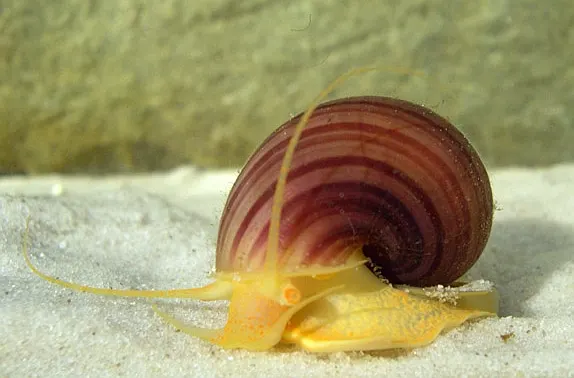
Mystery Snails (Pomacea bridgesii), also known as Spike-Topped Apple Snails, are one of the most popular freshwater snails in the aquarium hobby. Native to South America, these large, attractive snails come in a variety of colors and are excellent tank cleaners.
Unlike many aquatic snails, Mystery Snails are plant-safe and won't devour your aquascaping. They're fascinating to watch, featuring a long siphon they extend to breathe at the water's surface and eyes on stalks that peek out curiously at their surroundings.
The common aquarium mystery snail is Pomacea bridgesii, a South American apple snail that stays about 2 to 3 inches. That is the pet species. Giant apple snails are a different problem: some of them are regulated because they damage crops, and they should not be ordered under a mystery-snail label or released anywhere. Plan on 5 gallons or more per snail, a lifespan of 1 to 3 years, and easy care as long as the water is hard enough to build a shell and the animal is actually fed.
Breeding is easy and happens above the waterline. The female leaves the water and glues a pale clutch to the glass, the lid, or the filter housing. Those eggs need air. Submerging the clutch to stop it from hatching drowns the eggs, which is one way to limit numbers, but knocking it into the water and forgetting it only rots. If you want the babies, leave the clutch moist and above the surface until it darkens and the snails drop. A lid still has to keep the adults from climbing out while they spawn.
Mystery Snail baseline welfare rests on three habits: stable chemistry, measured feeding, and disciplined quarantine of new arrivals; these factors drive outcomes more than brand-name products.
Natural Habitat
Mystery Snails originate from slow-moving tropical waters.
- Range: Amazon River basin, Brazil, Paraguay, Bolivia
- Environment: Slow-moving rivers, ponds, swamps, and marshes
- Water Type: Warm, slightly alkaline freshwater
- Diet: Decaying plant matter, algae, detritus
Tank Requirements
Mystery Snails are adaptable but have some specific needs.
- Tank Size: 5 gallons per snail minimum; they have significant bioload
- Substrate: Sand or fine gravel (prevents antenna damage)
- Filtration: Moderate filtration with covered intakes
- Air Space: 2-3 inches between water and lid for egg laying
- Plants: Safe with most plants (unlike pest snails)
- Lid: Required - they will escape through any opening
Water Parameters
Mystery Snails need calcium-rich water for shell health: Your aquatic veterinarian and experienced Mystery Snail owners can offer perspective tailored to your situation.
| Parameter | Ideal Range |
|---|---|
| Temperature | 72-82°F (22-28°C) |
| pH | 7.2-7.8 |
| GH (General Hardness) | 8-18 dGH |
| KH (Carbonate Hardness) | 5-15 dKH |
| Ammonia | 0 ppm |
| Nitrite | 0 ppm |
| Nitrate | <20 ppm |
Calcium Is Critical
Mystery Snails NEED calcium for healthy shell growth. In soft water, shells will erode and develop holes. Add cuttlebone, calcium supplements, or crushed coral to maintain shell health.
Diet & Feeding
Mystery Snails are not picky eaters.
- Algae: Graze on tank algae but not efficient enough to control outbreaks
- Commercial Foods: Algae wafers, sinking pellets, snail-specific foods
- Vegetables: Blanched zucchini, spinach, kale, cucumber, carrots
- Calcium Foods: Cuttlebone, calcium blocks, crushed eggshells
- Protein: Occasional bloodworms or fish food for breeding
- Detritus: Dead plant matter and leftover fish food
With the groundwork complete, the specifics of daily care — nutrition, activity, preventive medicine, enrichment — fall out of the framework naturally
Behavior & Temperament
Mystery Snails are active and entertaining: Your aquatic veterinarian and experienced Mystery Snail owners can offer perspective tailored to your situation.
- Peaceful: Cannot harm tankmates; completely non-aggressive
- Active: More active than many snail species
- Siphon Breathing: Extend long siphon to surface for air
- Curious: Eyes on stalks explore the environment
- Floating: May float; can trap air in shell to move around tank
- Trapdoor: Close operculum (trapdoor) when threatened
The working pH on the card is 7.2 to 7.8, inside a broader listed range of 7.0 to 8.0. General hardness is 8 to 18 dGH and carbonate hardness 5 to 15 dKH. Temperature is 72 to 82°F. In soft, acidic water the shell pits and the snail fades even if algae is abundant. Offer a cuttlebone or a mineral block, and feed deliberately. An underfed mystery snail will eat live plants. A fed one still grazes soft leaves sometimes, but leftover wafers, blanched zucchini, and algae are the intended menu.
Color Varieties
Mystery Snails come in many beautiful colors.
- Gold/Yellow: Bright golden shell with yellow body
- Ivory: White shell with white body
- Blue: Blue-gray shell with dark body
- Black: Dark shell with dark body
- Purple: Purple-tinted shell
- Jade: Greenish shell with striping
- Magenta: Pink/magenta shell
- Wild Type: Brown with dark stripes
Compatibility
Mystery Snails are compatible with most peaceful tankmates: Your aquatic veterinarian and experienced Mystery Snail owners can offer perspective tailored to your situation.
Good Tankmates
- Most community fish (tetras, rasboras, livebearers)
- Corydoras and peaceful catfish
- Shrimp (all types)
- Other snails (Nerite, Ramshorn)
- Betta fish (usually safe)
- Guppies and other small livebearers
Avoid
- Loaches (especially Clown and Yoyo Loaches)
- Puffers (all types eat snails)
- Crayfish and large crabs
- Cichlids (many will attack snails)
- Assassin Snails (will prey on Mystery Snails)
Breeding
Mystery Snails breed differently than most aquatic snails.
- Sexing: Difficult; males have rounder shell opening
- Mating: Male mounts female for hours
- Egg Clutches: Laid ABOVE waterline on tank surfaces
- Clutch Size: 50-200 eggs in pink/white clusters
- Incubation: 2-4 weeks depending on humidity and temperature
- Baby Snails: Fall into water after hatching
Controlling Breeding
To prevent unwanted breeding, simply remove egg clutches from above the waterline. They're easy to spot and scrape off. Keep only one snail or all the same sex to prevent reproduction.
Health Issues
Common Mystery Snail health concerns: Your aquatic veterinarian and experienced Mystery Snail owners can offer perspective tailored to your situation.
- Shell Erosion: From soft/acidic water; add calcium
- Shell Cracks: From falls or attacks; usually heal with calcium
- Parasites: Rarely affected but can carry parasites
- Inactivity: May indicate poor water quality or illness
- Float Syndrome: Excessive floating may indicate trapped air
- Deep Retraction: Extended hiding in shell indicates stress
Signs of a Healthy Snail
- Active movement around tank
- Strong shell without erosion or holes
- Extended tentacles and eyes
- Healthy appetite
- Trapdoor closes tightly when touched
The operculum is the trapdoor on the foot. A healthy snail can pull it shut and seal the shell. A snail that is hanging out of the shell, or that smells rotten when picked up, is dead and should come out before it pollutes the tank. A closed operculum and no movement can also mean the animal is resting, so give it a day in a small container of tank water before you discard it. Ammonia and nitrite stay at 0 ppm, and nitrate should remain under 20 ppm. A dead snail hidden in the plants will break those numbers overnight.
They are useful algae grazers and they are not a cleanup crew that replaces water changes. Each 2-inch snail adds waste. Several of them in a 5-gallon tank, despite the per-snail gallon note being ignored, will foul the water. Copper medications sold for fish parasites kill apple snails. Move the snail out before any copper treatment, and do not return it until the copper is gone. The 1-to-3-year lifespan is normal. A snail that lived four months in a soft-water betta tank was not an old snail.
Food selection and exercise planning both benefit from referencing the breed's origin story — the resulting calibration is more accurate than a generic plan.
Is This Species Right for You?
Living with a Mystery Snail includes some unglamorous work that, despite its quiet profile, has an outsized effect on the animal's long-term welfare.
Mystery Snails Are Perfect For:
- Beginners to invertebrate keeping
- Planted tank owners (they're plant-safe)
- Community tanks with peaceful fish
- Those wanting colorful tank cleaners
- Aquarists interested in easy breeding projects
Mystery Snails May Not Be Ideal For:
- Tanks with snail-eating fish
- Very soft, acidic water setups
- Nano tanks (significant bioload)
- Those not wanting to manage breeding
The question to ask yourself is not whether you can keep a Mystery Snail alive, but whether you can keep one thriving. If you are willing to invest in those consistently, you and your Mystery Snail will both benefit.
Cost of Ownership
Small adjustments based on what you observe often yield the biggest improvements.
Related Species
If you're interested in Mystery Snails, consider these related species.
- Nerite Snail - Excellent algae eaters, won't breed in freshwater
- Ramshorn Snail - Colorful, smaller option
- Rabbit Snail - Unique elongated snails
- Assassin Snail - Controls pest snail populations
Ask Our AI About Mystery Snails
Have specific questions about Mystery Snail care, shell health, or breeding? Our AI assistant can provide personalized guidance.
Get Personalized AI Guidance
Ask Our AI NowDecision Guides for Mystery Snail
Use these only when comparing food, insurance, ownership budget, or beginner fit for this specific pet.
Mystery snails, Pomacea, are large freshwater apple snails that lay a clutch above the waterline. They eat algae, vegetables, and leftover pellets, and they need calcium for the shell. A shell that pits and goes pale is a mineral problem. Copper in a medication will kill them. A lid keeps them from climbing out on the rim.