Ember Tetra
This page is educational reference material for preparing questions. A licensed veterinarian examines the animal, makes the diagnosis, and sets the treatment.
Affiliate links may earn a commission. Affiliate disclosure.
Quick Facts
| Attribute | Details |
|---|---|
| Type | Freshwater |
| Family | Characidae |
| Adult Size | 0.8 inches |
| Lifespan | 2-4 years |
| Tank Size | 10+ gallons |
| Temperament | Peaceful Nano |
| Difficulty | Beginner |
Ember Tetra Overview
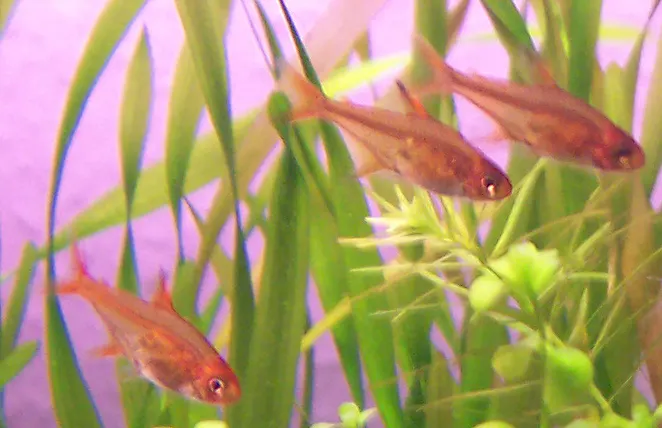
Ember tetras are Hyphessobrycon amandae, a nano characin from Brazil that stays about 0.8 inches and lives 2 to 4 years. Ten gallons is the floor for a school this small. Temperament is a peaceful nano fish and the care level says beginner. Two to 4 years is a short life next to a cardinal tetra. The beginner label fits a planted tank with a school of their own kind. It does not fit a barb tank, and it does not fit a tank where they are expected to be the dither fish for a cichlid.
Barbs that shove and nip have no place beside an ember tetra. A tiger barb or a rosy barb will outcompete and stress a fish that is under an inch. Ember tetras belong with other small peaceful fish: chili rasboras in a tank large enough for both schools, small corydoras such as pygmaeus, and shrimp if you accept that fry may be eaten. A 10-gallon tank is a species tank or a very quiet nano community. It is not a community in the sense of one of each colorful fish.
They show color in dim light over a dark substrate, in a tank with plants and some tannin. A bare, bright tank turns them a pale washed orange and keeps them glued to one clump of moss. A school of eight or more is when they spread out and flicker. Fewer than that and they hide. Males are slimmer and a deeper orange. Females are rounder. Spawning in fine plants happens in a mature tank, and the adults eat the eggs. Separate the breeders if you want fry. The display tank will not raise them for you.
The mouth is small. Micro pellets, crushed flake, and baby brine shrimp or cyclops are the foods that fit. Feed a little, often. A 0.8-inch fish with a two-day gap between large feedings loses condition fast, and the lifespan is already only 2 to 4 years. They occupy the middle of the tank. Surface feeders and bottom feeders can share the same water if nobody is a nipper. Watch the embers at feeding time. If they never reach the food, the tank is too busy for them.
They are often confused with juvenile flame tetras or with small serpae tetras. Flame tetras get larger and more aggressive. Serpae tetras nip fins. An ember stays tiny and, in the right tank, ignores its neighbors. If the shop fish is already chasing tankmates in the sales tank, it is probably not this species. Buy the school from a tank where they are shoaling together and already orange, not from a mixed tetra vat where one pale fish might be something else.
Temperament & Behavior
Two years is the low end of the life span and four is a good outcome, which is why the water and the company have to be right in the first week. A missing lid, an open filter intake, or ammonia in a new 10-gallon tank is how a school shrinks. Even a small tetra will ride a ripple out of an open rim, so cover the tank and give them floating plants to sit under. Keep the current gentle. A powerhead meant for a hillstream loach will exhaust an ember. Soft light, small food, and a real school are what get them to the better end of 2 to 4 years.
Ember Tetra stable water chemistry, deliberate feeding, and a disciplined quarantine habit are the tripod that supports everything else; these factors drive outcomes more than brand-name products.
Breed origin shapes several practical defaults: calorie density, exercise tolerance, environmental preferences. Plans that respect these origins outperform plans that ignore them.
Housing & Environment Requirements
A minimum tank size of 10+ gallons is recommended for Ember Tetras. Provide appropriate substrate, hiding places, and peaceful tankmates. A quality filtration system and heater are essential.
Diet & Nutrition
Feed Ember Tetras a varied diet appropriate for their species. Use micro-pellets, crushed flakes, and small frozen foods like baby brine shrimp. Overfeeding leads to water quality issues. Vary the diet to ensure complete nutrition.
Common Health Issues
Common health issues in Ember Tetras include ich (white spot disease), fin rot, bacterial infections, and stress-related conditions. Maintaining excellent water quality is the best prevention. Quarantine new fish for 2-4 weeks before adding to the main tank. Have aquarium salt and broad-spectrum medications on hand for emergencies.
Grooming & Maintenance
Remove uneaten food promptly. Trim live plants as needed. Monitor equipment function daily. Replace filter media according to manufacturer recommendations.
Beginner-Friendly Rating: Beginner
Ember Tetras are excellent for newcomers to fishkeeping.
Before acquiring an Ember Tetra, research thoroughly and prepare the habitat in advance. Join online communities and forums dedicated to fishkeeping to connect with experienced keepers who can offer guidance specific to Ember Tetra care.
Socialization & Enrichment
Rearranging decorations periodically provides novelty. For Ember Tetras specifically, consider their natural habitat when designing your aquascape - this helps encourage natural behaviors and reduces stress.
Feeding enrichment is another important aspect. Live and frozen foods provide hunting stimulation that dry foods cannot. This knowledge helps you detect health issues early and optimize care.
Where to Find Ember Tetras
Purchase Ember Tetras from reputable local fish stores (LFS) that maintain clean, well-cared-for aquariums. Online sellers with strong reviews and live arrival guarantees are another option.
Cost of Ownership Overview
| Expense | Estimated Cost |
|---|---|
| Initial Setup (tank + equipment) | $100-$500+ |
| Fish Purchase | $5-$100+ per fish |
| Annual Maintenance | $200-$500 |
| Food (annual) | $50-$150 |
Daily Care Routine for Ember Tetras
Successful Ember Tetra keeping depends on consistent daily observation and maintenance.
What size tank do Ember Tetras need?
An Ember Tetras does best with at least 10+ gallons — bigger water volumes give you more stable chemistry, extra swim space, and flexibility when you want to add tankmates.
What fish are compatible with Ember Tetras?
With their peaceful nano temperament, Ember Tetras are compatible with many community fish of similar size and temperament. Good tankmates include other peaceful species that share similar water parameter requirements. Always research specific compatibility before adding new species to your aquarium.
How often should I feed Ember Tetras?
Feed Ember Tetras 1-2 times daily, offering only what they can consume within 2-3 minutes. Fasting one day per week can benefit digestive health.
Are Ember Tetras good for beginners?
Yes, Ember Tetras are excellent for beginning fishkeepers. Start with a properly cycled tank and maintain regular maintenance habits.
Long-Term Commitment & Responsible Ownership
Owning Ember Tetras is a commitment that spans their full lifespan of 2-4 years. Aquariums require daily attention, weekly maintenance, and ongoing expense. Many fishkeeping communities have members willing to help in emergencies.
Plan for equipment upgrades as fish grow and needs change over time.
Get Personalized Ember Tetra Guidance
Ask Our AI NowDecision Guides for Ember Tetra
Use these only when comparing food, insurance, ownership budget, or beginner fit for this specific pet.
Is Ember Tetra Right for Your Aquarium?
Evaluating an Ember Tetra for your aquarium is less about enthusiasm and more about practical constraints. Consider the species' typical adult size, the space required for appropriate enrichment, the daily and weekly care tasks, and the cost profile over the animal's lifespan. Households that evaluate these honestly end up with sustainable, enjoyable placements; households that underestimate any dimension tend to rehome within the first year.
Ember Tetra May Be Great For:
- A planted nano keeper who will school Hyphessobrycon amandae in groups of eight or more
- Someone with a lid, gentle flow, and no fin-nipping tankmates
- An aquarist feeding small foods in a mature tank of about 10 gallons or more
Ember Tetra May Not Be Ideal For:
- A pair of embers in a betta bowl
- Barbs, large gouramis, or angelfish
- A brand-new uncycled vase
- Plan the adult size, the vet, and the daily work for the ember tetra before it comes home.
Keeping an Ember Tetra is one of those experiences that gets better with time. The first few weeks involve a steep learning curve, but once you establish a routine, the daily care becomes second nature. Most long-term Ember Tetra keepers say they wish they had started sooner.
Ember tetras, Hyphessobrycon amandae, are tiny orange fish from the Rio Araguaia. A school of eight or more fits a planted 10-gallon tank in the mid-70s Fahrenheit. They eat fine flake and micro food. A bright, bare tank with two embers and a boisterous barb is the setup that fades their color.