Congo Tetra
This page is educational reference material for preparing questions. A licensed veterinarian examines the animal, makes the diagnosis, and sets the treatment.
Affiliate links may earn a commission. Affiliate disclosure.
Quick Facts
| Attribute | Details |
|---|---|
| Type | Freshwater |
| Family | Alestiidae |
| Adult Size | 3-3.5 inches |
| Lifespan | 3-5 years |
| Tank Size | 30+ gallons |
| Temperament | Peaceful Schooling |
| Difficulty | Beginner-Intermediate |
Congo Tetra Overview
Congo tetras are Phenacogrammus interruptus, an African tetra in the family Alestiidae, not a South American tetra that picked up a river name. Adults reach about 3 to 3.5 inches and live 3 to 5 years. Thirty gallons is the smallest tank that gives the fins room. They are peaceful schooling fish, and the difficulty sits between beginner and intermediate because the males need room to carry their fins and the school needs length to swim. A 10-gallon community is the wrong shape even when the gallon count feels close on paper.
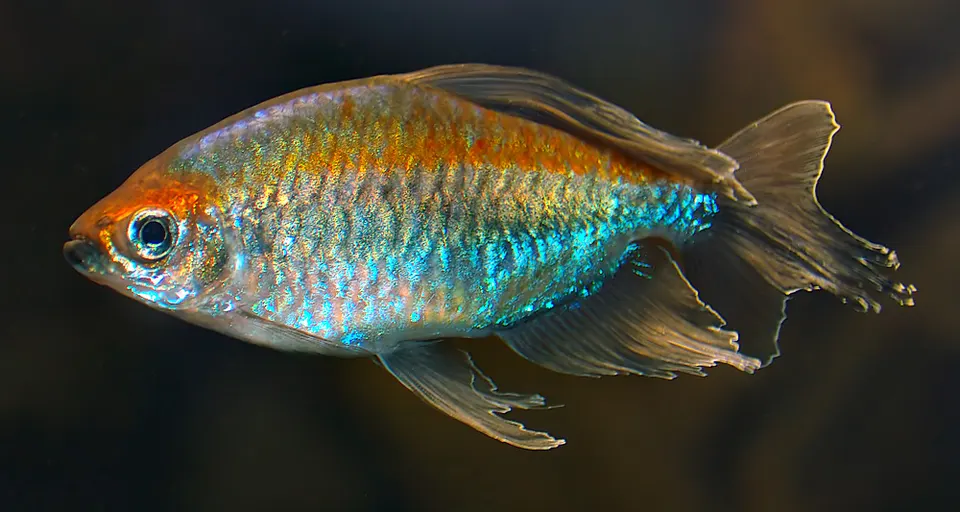
Males grow trailing extensions on the dorsal, anal, and tail fins, and they flash bronze, blue, and red when the tank is dim and the water is soft. Females are plainer and fuller. The fins are the reason fin-nippers are out. Tiger barbs and serpae tetras will crop a male Congo down to a fish that no longer displays. Keep them with other peaceful midwater fish that will not harass those fins: larger rasboras, peaceful rainbowfish, and corydoras on the sand if the water suits both.
They use open water. A tank that is wall-to-wall plants with no swimming lane makes a Congo tetra hide and fade. Plant the sides and the back, leave a front channel, and keep the light from blasting the tank white. They show color at dawn and dusk more than at noon. A school of six or more, with both sexes, is the minimum social unit. A pair in a 30-gallon tank spends its time behind the filter. Buy the group at once. Adding two pale females later to a settled group of males works better than adding a new male.
The diet is an omnivore's diet with a bias toward small foods in the water column. A quality flake or small pellet, frozen daphnia, and brine shrimp keep the body deep and the color moving. They are not surface specialists and they are not bottom feeders. Food that sinks in one lump to the gravel misses them. Three to 5 years is shorter than people expect from a tetra this visible. A male with shredded fins in a busy community often does not reach the top of that range, because the stress is constant and low-grade rather than a single disaster.
Congo Tetra stable water chemistry, deliberate feeding, and a disciplined quarantine habit are the tripod that supports everything else; these factors drive outcomes more than brand-name products.
Temperament & Behavior
They come from the Congo basin and do best in soft, slightly acidic water with some tannin, not in a rift-lake tank. The African in the name confuses shoppers who have just bought mbuna. The water is the opposite. Hard, alkaline conditions mute the iridescence and shorten the easy years. Intermediate care is mostly this: a long tank, a real school, intact fins, and water that is gentler than cichlid salt and crushed coral. Beginner care is possible in a quiet planted 30-gallon tank that was actually set up for them.
A Congo tetra that clamps its fins and loses the bronze sheen after a move is often reacting to a pH swing or to being the new male. Give the school time in stable water before you decide the color was a shop trick. Do not house them with angelfish once the angels can fit a tetra of this size in the mouth, and do not house them with any fish that nips. The fin extensions are the display and the weak point. If you want one showy male, you still buy the school. A single male in a mixed tetra tank is a shy, faded fish with nothing to display to.
Housing & Environment Requirements
A minimum tank size of 30+ gallons is recommended for Congo Tetras. Provide appropriate substrate, hiding places, and peaceful tankmates. A quality filtration system and heater are essential.
Diet & Nutrition
Feed Congo Tetras a varied diet appropriate for their species. Overfeeding leads to water quality issues. Vary the diet to ensure complete nutrition.
A good grip on the basics is what makes downstream choices — food, exercise, preventive care — feel tractable
Common Health Issues
Common health issues in Congo Tetras include ich (white spot disease), fin rot, bacterial infections, and stress-related conditions. Maintaining excellent water quality is the best prevention. Quarantine new fish for 2-4 weeks before adding to the main tank. Have aquarium salt and broad-spectrum medications on hand for emergencies.
Grooming & Maintenance
Remove uneaten food promptly. Trim live plants as needed. Monitor equipment function daily. Replace filter media according to manufacturer recommendations.
Beginner-Friendly Rating: Beginner-Intermediate
Congo Tetras are suitable for keepers with some experience.
Before acquiring a Congo Tetra, research thoroughly and prepare the habitat in advance. Join online communities and forums dedicated to fishkeeping to connect with experienced keepers who can offer guidance specific to Congo Tetra care.
Socialization & Enrichment
Rearranging decorations periodically provides novelty. For Congo Tetras specifically, consider their natural habitat when designing your aquascape - this helps encourage natural behaviors and reduces stress.
Feeding enrichment is another important aspect. Live and frozen foods provide hunting stimulation that dry foods cannot. This knowledge helps you detect health issues early and optimize care.
Where to Find Congo Tetras
Purchase Congo Tetras from reputable local fish stores (LFS) that maintain clean, well-cared-for aquariums. Online sellers with strong reviews and live arrival guarantees are another option.
Cost of Ownership Overview
| Expense | Estimated Cost |
|---|---|
| Initial Setup (tank + equipment) | $100-$500+ |
| Fish Purchase | $5-$100+ per fish |
| Annual Maintenance | $200-$500 |
| Food (annual) | $50-$150 |
Move these characteristics from background reading into the specific routines you keep with your pet, and the care plan becomes materially more effective.
Daily Care Routine for Congo Tetras
Successful Congo Tetra keeping depends on consistent daily observation and maintenance.
Quick Answers About Congo Tetras
If you are optimizing a Congo Tetra's routine, this is one of the higher-leverage items to get right early.
What size tank do Congo Tetras need?
30+ gallons is the floor for a Congo Tetras; above that, water-chemistry stability and tankmate options improve substantially.
What fish are compatible with Congo Tetras?
With their peaceful schooling temperament, Congo Tetras are compatible with many community fish of similar size and temperament. Good tankmates include other peaceful species that share similar water parameter requirements. Always research specific compatibility before adding new species to your aquarium.
How often should I feed Congo Tetras?
Feed Congo Tetras 1-2 times daily, offering only what they can consume within 2-3 minutes. Fasting one day per week can benefit digestive health.
Are Congo Tetras good for beginners?
Congo Tetras are suitable for fishkeepers with some experience.
Long-Term Commitment & Responsible Ownership
Owning Congo Tetras is a commitment that spans their full lifespan of 3-5 years. Aquariums require daily attention, weekly maintenance, and ongoing expense. Many fishkeeping communities have members willing to help in emergencies.
Plan for equipment upgrades as fish grow and needs change over time.
Get Personalized Congo Tetra Guidance
Ask Our AI NowDecision Guides for Congo Tetra
Use these only when comparing food, insurance, ownership budget, or beginner fit for this specific pet.
Congo Tetra May Be Great For:
- A keeper who will school Phenacogrammus interruptus in 30 gallons or more with a lid
- Someone who wants the male's long fins and will not add nippy barbs
- An aquarist with soft, slightly acidic water and open swimming room
Congo Tetra May Not Be Ideal For:
- A short tank of tiger barbs
- One Congo tetra as a centerpiece
- An uncovered aquarium. They jump
- Plan the adult size, the vet, and the daily work for the congo tetra before it comes home.
Before getting a Congo Tetra, make sure the practical side lines up: you have the right equipment, the budget for ongoing care, and the time for daily maintenance. If those boxes are checked, the rest — learning the species' quirks, fine-tuning the habitat, building a care routine — comes with experience.
A good grip on the basics is what makes downstream choices — food, exercise, preventive care — feel tractable Common health issues in Congo Tetras include ich (white spot disease), fin rot, bacterial infections, and stress-related conditions.