Cardinal Tetra
This page is educational reference material for preparing questions. A licensed veterinarian examines the animal, makes the diagnosis, and sets the treatment.
Quick Facts
| Attribute | Details |
|---|---|
| Type | Freshwater |
| Size | Small (2 in) |
| Lifespan | 4-5 years |
| Temperature | 73-81°F |
| pH Range | 4.6-6.2 |
| Min Tank Size | 10 gal |
| Care Level | Beginner |
| Diet | Omnivore |
| Temperament | Peaceful |
Recommended for Cardinal Tetras
Cardinal Tetra Overview
The Cardinal Tetra is a small (2 in) freshwater species that is an excellent choice for both beginners and experienced aquarists. With a lifespan of 4-5 years, this peaceful species requires a minimum tank size of 10 gal.
Cardinal Tetras thrive in water temperatures of 73-81°F with a pH range of 4.6-6.2. As an omnivore, they accept a wide variety of foods.
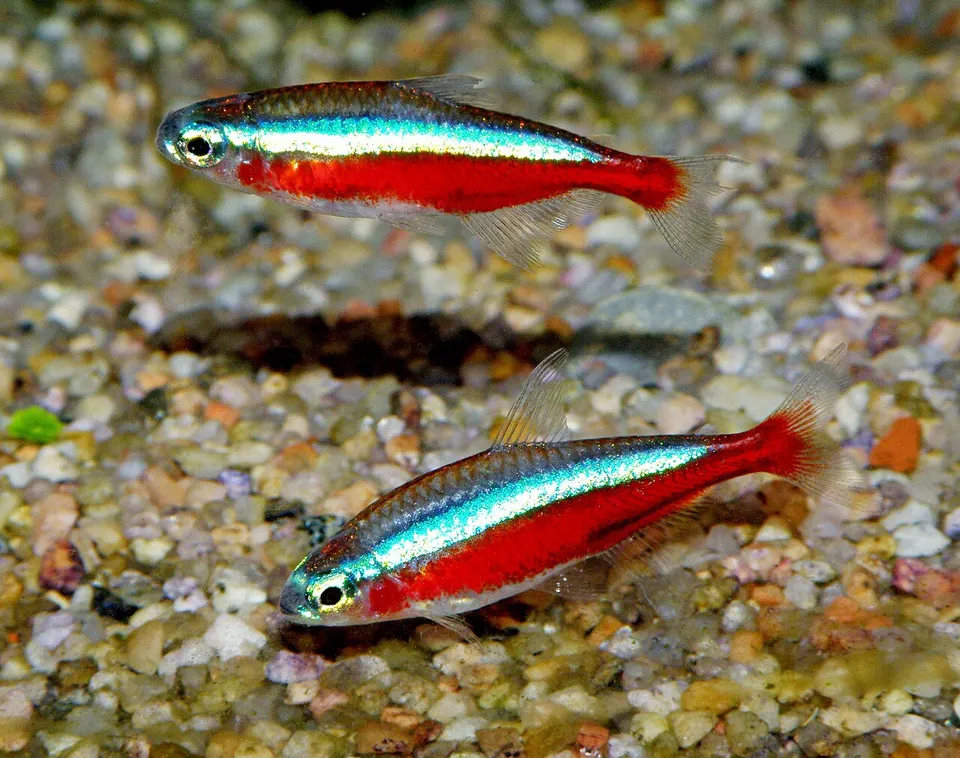
Cardinal tetras are Paracheirodon axelrodi, the neon's larger, redder cousin from the upper Rio Negro. Adults are about 2 inches and live 4 to 5 years. The tank minimum is 10 gallons, which is enough for a small school and tight once you keep the group size these fish actually need. They want 73 to 81°F and a pH of 4.6 to 6.2. That pH is more acidic than a standard community tank. Hard, alkaline tap water is why a school looks brilliant in the shop and fades at home.
The color split from a neon tetra is the whole body, not a red patch behind the dorsal. A cardinal carries the blue line and the red stripe from nose to tail. Neons stop the red about halfway. People buy cardinals, house them like neons in neutral water, and then blame the breeder when the red shrinks. Soft water, dim light, and a dark substrate are what keep the stripe. Leaf litter or a little botanicals can pull a hard tap-water tank down into the range. Chasing 4.6 with acid buffers in a tank you cannot test is how you crash it.
Cardinal Tetra baseline welfare rests on three habits: stable chemistry, measured feeding, and disciplined quarantine of new arrivals; these factors drive outcomes more than brand-name products.
Tank Size
- Minimum: 10 gal
- Recommended: Larger is always better for stability and swimming room.
- Type: Freshwater planted or community tank
Equipment
- Filtration: Quality canister or HOB filter rated for your tank size.
- Heating: Reliable heater to maintain 73-81°F.
- Lighting: Standard aquarium lighting; planted tanks benefit from full-spectrum.
- Air Pump: Optional but beneficial for oxygenation.
Water Parameters
| Parameter | Ideal Range |
|---|---|
| Temperature | 73-81°F |
| pH | 4.6-6.2 |
| Ammonia | 0 ppm |
| Nitrite | 0 ppm |
| Nitrate | <20 ppm |
Water Quality Warning
Always cycle your tank fully before adding fish. Use a quality test kit to monitor ammonia, nitrite, and nitrate levels. Never add Cardinal Tetras to an uncycled or newly set up tank.
Diet & Feeding
- Primary Diet: Omnivore.
- Foods: High-quality flakes/pellets, frozen brine shrimp, mysis shrimp, and blanched vegetables.
- Variety: Rotate different food types for balanced nutrition.
Cardinal Tetra Tank Essentials
Early integration of these specifics produces a plan that ages with the animal rather than one that requires repeated emergency adjustments
Common Health Issues
- Ich (White Spot Disease): White spots on body and fins. Raise temperature gradually and use ich medication.
- Parasites: Internal and external parasites; quarantine new additions.
Compatibility
- Temperament: Peaceful - pairs well with other peaceful community species.
- Tank Mates: Other peaceful community fish of similar size.
- Avoid: Large aggressive species that may bully or eat them.
Is This Species Right for You?
A Cardinal Tetra tends to reveal the payoff of this kind of attention gradually, rather than in a single dramatic moment.
Cardinal Tetras Are Great For:
- Beginning aquarists looking for a rewarding species
- Community freshwater tank keepers
- Those who can maintain stable freshwater parameters
Cardinal Tetras May Not Be Ideal For:
- Those unable to commit to regular water testing and maintenance
- Those looking for a zero-maintenance pet
Ask Our AI About Cardinal Tetras
The question to ask yourself is not whether you can keep a Cardinal Tetra alive, but whether you can keep one thriving. If you are willing to invest in those consistently, you and your Cardinal Tetra will both benefit.
When to Seek Help
- Water testing: Before treating for disease, always test water parameters.
Diet and Nutrition Tips
- Primary diet: Feed a high-quality staple food formulated for your Cardinal Tetra's dietary type (herbivore, omnivore, or carnivore). Look for foods with whole ingredients and minimal fillers.
- Variety ensures complete nutrition and encourages natural foraging.
- Feeding frequency: Feed small amounts 1-2 times daily.
- Avoid overfeeding: Overfeeding is the most common nutritional mistake in fishkeeping. It leads to obesity, water pollution, and secondary health problems.
Tank Environment and Stimulation
- Tank size: Always choose a tank that meets or exceeds the minimum recommended size for Cardinal Tetra. Larger tanks are more stable and forgiving of water quality fluctuations.
- Water parameters: Maintain consistent temperature, pH, and hardness levels appropriate for Cardinal Tetra. Test water weekly and perform regular partial water changes.
- Filtration: Use a quality filter rated for your tank size.
- This reduces stress and aggression.
Tank Maintenance Essentials
- Water changes: Perform 20-30% partial water changes weekly.
- Filter maintenance: Rinse filter media in old tank water monthly.
- Algae control: Some algae is normal, but excessive growth indicates nutrient imbalance. Adjust lighting duration and consider adding algae-eating species.
- Water testing: Test ammonia, nitrite, nitrate, and pH at least weekly. Keep a log to track trends and catch problems early.
Living Environment
- A stable location reduces stress and prevents temperature fluctuations.
- Compatible tankmates: Research compatibility before adding new species. Aggression, different water parameter requirements, and size mismatches are common problems.
- Substrate choice: Select substrate appropriate for your Cardinal Tetra's natural behavior, whether that is sand for digging species or planted substrate for aquascaping.
- Equipment failures can be life-threatening.
Helpful Resources for Cardinal Tetra Owners
The payoff for learning Cardinal Tetra-specific care patterns is quiet and material: fewer behavioural surprises, fewer veterinary escalations, fewer training resets.
Explore More Guides
Get Personalized AI Guidance
Ask Our AI NowDecision Guides for Cardinal Tetra
Use these only when comparing food, insurance, ownership budget, or beginner fit for this specific pet.
Behavior & Temperament
Cardinal Tetra are characterized by a peaceful disposition that influences their care requirements and compatibility.
- General Disposition: Peaceful nature that defines daily interactions
- Social Behavior: Specific social needs that owners should understand and accommodate
- Activity Patterns: Natural activity cycles that influence care scheduling
They are peaceful omnivores and a schooling fish. Six is a bare group. Ten or more in a longer tank than the 10-gallon minimum is when they use the open water instead of hiding in one plant. A small pellet, crushed flake, and frozen baby brine or daphnia match a 2-inch mouth. They feed in the middle of the tank. Long-finned tankmates that nip, and cichlids large enough to eat a 2-inch tetra, are the wrong company. Angelfish and cardinals are a classic pair only when the angels are not yet large enough to swallow them.
Wild-caught fish still make up much of the trade, and a new school is sensitive to a fresh tank. Add them after the filter is stable, not the week the aquarium is filled. Nitrate belongs under 20 ppm, and any ammonia or nitrite reading means the school waits. A cardinal that clamps its fins and loses the blue line in the first three days is usually ammonia or a pH the fish was not acclimated toward. Drip them over from the bag. Dumping a soft-water fish into a hard tank all at once is a reliable way to lose a few.
Four to 5 years is the life if the school stays together and the pH stays soft. A lone cardinal in a community of boisterous barbs will not reach it. They are listed as beginner fish, and a captive-bred school in a planted tank with soft water behaves like one. A wild school in an uncycled 10-gallon tank with a high pH does not. The beginner label assumes the water is already in the range on the card.
Cost of Ownership
A cardinal tetra is a soft, acidic-water schooling fish from the Rio Negro, and it fades in a small, alkaline, unplanted tank kept too warm and too dirty. Keep them in a group of at least eight, in a cycled tank, and do not confuse them with the hardier neon if your water is liquid rock. They are not a beginner fish just because they are small and cheap. A single cardinal hiding in a corner is a stressed fish.
Each case deserves individual attention — what applies broadly may need adjustment for specific circumstances.
Cardinal tetras, Paracheirodon axelrodi, come from warm blackwater in the Rio Negro. They want a school, soft acidic water, and a temperature that stays warmer than a neon tetra prefers, often the upper 70s to low 80s Fahrenheit. A few cardinals in a bright bare tank lose the red stripe and nip.