Japanese Chin
This page is educational reference material for preparing questions. A licensed veterinarian examines the animal, makes the diagnosis, and sets the treatment.
Affiliate links may earn a commission. Affiliate disclosure.
Quick Facts
| Attribute | Details |
|---|---|
| Breed Group | Toy |
| Size | Toy (7-11 lbs) |
| Height | 8-11 inches |
| Lifespan | 10-12 years |
| Temperament | Charming, Noble, Loving |
| Good with Kids | Better with older children |
| Good with Other Dogs | Excellent |
| Shedding | Moderate |
| Exercise Needs | Low (20-30 minutes daily) |
| Trainability | Good (sensitive and smart) |
Recommended for Japanese Chins
The Farmer's Dog - Fresh food for toy breeds | Embark DNA - Health screening for genetic conditions | Spot Insurance - Coverage for breed-specific conditions
Japanese Chin Overview
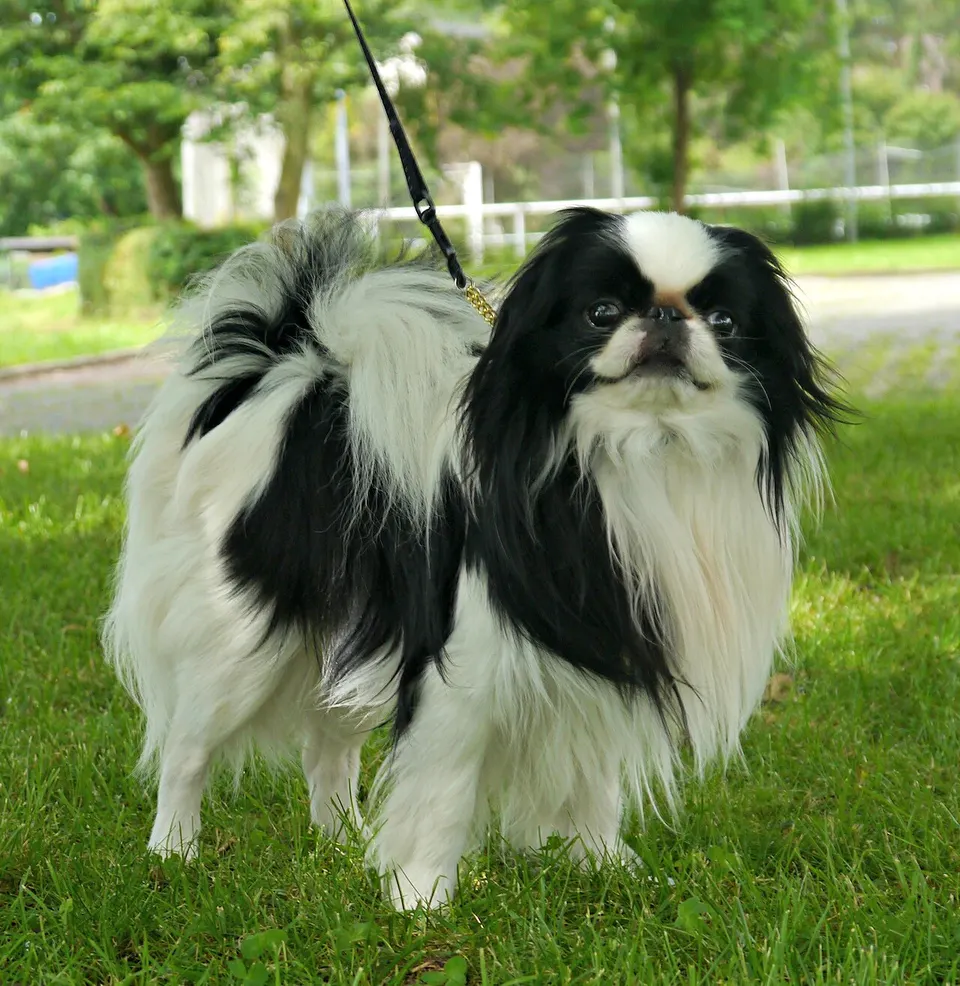
The Japanese Chin is an ancient breed that was treasured in the imperial courts of Japan and China. Despite the name, the breed likely originated in China before being refined in Japan, where they were kept exclusively by nobility. These elegant companions were so valued that they were often given as gifts to foreign dignitaries.
Known for their cat-like behaviors, Japanese Chins are famous for their ability to climb, their fastidious self-grooming habits, and their tendency to perch on high surfaces. Their distinctive expression, created by their wide-set eyes and flat face, gives them an almost human-like look that many find irresistible.
The Japanese Chin is a breed that commands attention not just for its physical appearance but for the depth of personality and capability it brings to a household. With a lifespan averaging 10-12 years, the decision to welcome a Japanese Chin into your family is one that will shape your daily routine, activity levels, and emotional life for well over a decade. This breed's charming, noble, loving temperament is the product of generations of selective breeding for specific traits—understanding this heritage provides valuable insight into why your Japanese Chin behaves the way it does and what it needs from you as an owner to truly thrive.
Exceptional Japanese Chin care starts with understanding, not just affection. Knowing why your Japanese Chin behaves the way it does — what instincts drive its daily patterns, what environments suit it best, what stressors to avoid — makes every care decision more effective.
Sharing your space with a Japanese Chin means making room — literally and figuratively — for their specific needs. Owners who recognize this early and plan for it tend to have a much smoother experience than those who expect the Japanese Chin to simply fit into their existing routine unchanged.
Temperament & Personality
Japanese Chins are known for their refined, elegant nature.
- Cat-Like: Known for climbing, self-grooming, and independent behavior.
- Affectionate & Loyal: Devoted to their families while maintaining dignity.
- Intelligent & Sensitive: Quick learners who respond to their owner's moods.
- Quiet & Refined: Not excessive barkers; prefer calm environments.
- Good with Others: Generally friendly with other pets and gentle dogs.
The charming, noble, loving nature of the Japanese Chin is not a simple personality label—it is a complex behavioral profile shaped by breed history, individual genetics, early socialization experiences, and ongoing environmental factors. What this means in practice is that two Japanese Chin from different lines, raised in different environments, can display meaningfully different behavioral tendencies while still sharing core breed characteristics.
Your veterinarian knows your Japanese Chin best — always verify dietary choices with them, especially if your dog has existing health conditions.
Common Health Issues
Japanese Chins can be prone to certain health conditions.
Respiratory Issues
- Brachycephalic Syndrome: Flat face causes breathing difficulties.
- Heat Sensitivity: Cannot regulate temperature well due to shortened airways.
- Reverse Sneezing: Common but usually harmless episodes.
Heart Conditions
- Heart Murmurs: Can develop mitral valve issues.
- Early-Onset Heart Disease: Regular cardiac screening recommended.
Other Conditions
- Patellar Luxation: Kneecap displacement common in toy breeds.
- Eye Problems: Prominent eyes prone to injury, cataracts, and dry eye.
- GM2 Gangliosidosis: Fatal neurological disease; DNA testing available.
- Atlanto-Axial Subluxation: Neck instability in some small dogs.
Health Screening Recommendation
Before getting a Japanese Chin, ask breeders for cardiac evaluations, patella certifications, and DNA tests for GM2 gangliosidosis. Consider Embark DNA testing to screen for genetic health conditions.
Good health outcomes for a Japanese Chin depend less on reacting to problems and more on preventing them from gaining a foothold.
Cost of Ownership
Understanding the full cost helps prepare for Japanese Chin ownership.
| Expense Category | Annual Cost Estimate |
|---|---|
| Food (premium quality) | $200-$350 |
| Veterinary Care (routine) | $300-$600 |
| Pet Insurance | $300-$550 |
| Grooming | $200-$400 |
| Training (first year) | $150-$350 |
| Supplies & Toys | $100-$200 |
| Total Annual Cost | $1,250-$2,450 |
Japanese Chin are a brachycephalic breed, and that flat face carries real veterinary implications — they can struggle in heat, snore chronically, and are at elevated risk for respiratory issues that may require surgical correction. Despite their small size, vet costs for brachycephalic breeds can exceed those of healthier, larger dogs. Regular dental care is equally important, as toy breeds are disproportionately affected by periodontal disease.
Expect the first year of Japanese Chin ownership to carry the heaviest financial load.
Regular health assessments for your Japanese Chin are an investment, not an expense.
Exercise & Activity Requirements
Japanese Chins have low exercise needs: For practical care decisions, Japanese Chin-specific advice produces better outcomes than generalised pet content.
- Daily Exercise: 20-30 minutes of gentle activity
- Indoor Play: Content with short play sessions inside
- Heat Avoidance: Keep cool; they overheat easily
- Climbing: Provide safe perching spots to satisfy climbing instincts
- Mental Stimulation: Puzzle toys and gentle training
Training Tips for Japanese Chins
Japanese Chins respond well to gentle, respectful training.
- Gentle Methods: Never use harsh corrections; they're very sensitive
- Positive Reinforcement: Treats and praise work well
- Short Sessions: Brief training periods maintain interest
- Respect Independence: They may choose when to comply
- Early Socialization: Important for building confidence
Nutrition & Feeding
Proper nutrition supports the Japanese Chin's health.
- Toy Breed Formula: Small kibble for small mouths
- Portion Control: 1/4 to 1/2 cup daily, divided into two meals
- Weight Management: Extra weight stresses breathing
- Dental Health: Consider dental-specific foods
- Elevated Bowls: May help with flat-faced eating
Top Food Choices for Japanese Chins
The Farmer's Dog - Fresh, easily digestible meals | Ollie - Custom fresh food plans | Hill's Science Diet - Toy breed formulas
When evaluating food options for your Japanese Chin, resist the pull of elaborate ingredient lists. A simpler formula with higher-quality components often delivers better results than a premium-sounding blend loaded with extras your Japanese Chin does not need.
Grooming Requirements
- Brushing: 2-3 times weekly to prevent tangles
- Self-Grooming: They groom themselves like cats
- Face Cleaning: Daily cleaning around eyes and facial folds
- Bathing: Every 3-4 weeks or as needed
- Nail Trimming: Every 2-3 weeks
Is a Japanese Chin Right for You?
Japanese Chins Are Great For:
- Those seeking a quiet, refined companion
- Cat lovers who also want a dog
- Apartment dwellers
- Seniors or less active individuals
- Those who appreciate an independent but loving pet
Japanese Chins May Not Be Ideal For:
- Families with young, rough-playing children
- Very active households seeking an adventure companion
- Hot climates without air conditioning
- Those seeking a highly trainable, eager-to-please dog
- People who want a dog for outdoor activities
A Japanese Chin is a tiny brachycephalic companion, often under 10 pounds, with a flat face and a long coat. They overheat, they injure easily if dropped, and patellar luxation is the knee skip to have checked. They are a lap dog, not a jogging partner. Snoring that becomes open-mouth breathing in a cool room needs a vet.
The Japanese Chin carries itself with a self-possession that feels genuinely aristocratic — this is a dog that has spent centuries in the laps of nobility and has not forgotten it. They are fastidious groomers, tend to perch on elevated surfaces in cat-like fashion, and can read a person's mood with uncanny accuracy, choosing to be near you when you need company and giving you space when you do not. Owners who appreciate a quiet, emotionally intuitive companion rather than a high-energy working partner find the Chin one of the most personally rewarding breeds they have ever kept.
Related Breeds to Consider
If you're interested in Japanese Chins, you might also consider.
- Pekingese - Similar Asian heritage and temperament
- English Toy Spaniel - Similar size and gentle nature
- Shih Tzu - Similar size, more outgoing
- Tibetan Spaniel - Similar cat-like behaviors
Ask Our AI About Japanese Chins
Japanese Chin ownership includes several low-visibility activities whose compound effect exceeds their individual profile.
Related Health & Care Guides
Get Personalized AI Guidance
Ask Our AI NowDecision Guides for Japanese Chin
Use these only when comparing food, insurance, ownership budget, or beginner fit for this specific pet.