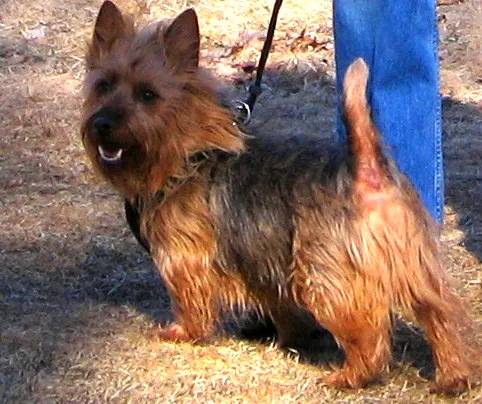
Australian Terrier
This page is educational reference material for preparing questions. A licensed veterinarian examines the animal, makes the diagnosis, and sets the treatment.
Affiliate links may earn a commission. Affiliate disclosure.
Quick Facts
| Attribute | Details |
|---|---|
| Breed Group | Terrier |
| Size | Small (15-20 lbs) |
| Height | 10-11 inches |
| Lifespan | 11-15 years |
| Temperament | Spirited, Affectionate, Courageous |
| Good with Kids | Very Good |
| Good with Other Dogs | Good (may be bossy) |
| Shedding | Low |
| Exercise Needs | Moderate (30-60 min daily) |
| Trainability | Good |
Recommended for Australian Terriers
The Farmer's Dog - Fresh food for small terriers | Embark DNA - Health screening for genetic conditions | Spot Insurance - Coverage for patellar luxation & more
Australian Terrier Overview
The Australian Terrier is one of the smallest working terriers, developed in Australia in the early 19th century from various British terrier breeds brought by settlers. This hardy little dog was bred to control snakes and rodents, tend sheep, and serve as a watchdog and companion in the harsh Australian outback.
Despite their small size, Australian Terriers are sturdy, self-confident dogs with big personalities. They are known for their weatherproof rough coat, which requires minimal maintenance, and their loyal, affectionate nature. They make excellent companions for those who appreciate a spirited, devoted terrier in a compact package.
The Australian Terrier is a breed that commands attention not just for its physical appearance but for the depth of personality and capability it brings to a household. With a lifespan averaging 11-15 years, the decision to welcome an Australian Terrier into your family is one that will shape your daily routine, activity levels, and emotional life for well over a decade. This breed's spirited, affectionate, courageous temperament is the product of generations of selective breeding for specific traits—understanding this heritage provides valuable insight into why your Australian Terrier behaves the way it does and what it needs from you as an owner to truly thrive.
Caring well for an Australian Terrier requires more than meeting their basic physical needs. Owners who approach Australian Terrier care with this depth of knowledge create an environment where the animal can genuinely flourish.
Sharing your space with an Australian Terrier means making room — literally and figuratively — for their specific needs. Owners who recognize this early and plan for it tend to have a much smoother experience than those who expect the Australian Terrier to simply fit into their existing routine unchanged.
Temperament & Personality
Australian Terriers have a delightful personality.
- Spirited & Courageous: Bold little dogs that don't back down despite their small size.
- Affectionate: Form strong bonds with their families and enjoy being close to their people.
- Alert: Excellent watchdogs who will alert to visitors or unusual activity.
- Intelligent: Quick learners who can be creative problem solvers.
- Good with Children: Generally patient and playful with kids.
- Independent: Can be stubborn but less so than many terrier breeds.
The spirited, affectionate, courageous nature of the Australian Terrier is not a simple personality label—it is a complex behavioral profile shaped by breed history, individual genetics, early socialization experiences, and ongoing environmental factors. What this means in practice is that two Australian Terrier from different lines, raised in different environments, can display meaningfully different behavioral tendencies while still sharing core breed characteristics.
Breed averages are a rough map, not the territory. Your Australian Terrier's weight, energy, and how it recovers from effort tell you more about what to adjust than any article can.
Common Health Issues
Australian Terriers are generally healthy but have some concerns.
orthopedic problems
- Patellar Luxation: Kneecap displacement common in small breeds.
- Legg-Calve-Perthes Disease: Hip joint degeneration in young dogs.
Other Concerns
- Diabetes: Australian Terriers have a higher incidence than most breeds.
- Allergies: Skin and food allergies can occur.
- Thyroid Issues: Hypothyroidism reported in the breed.
- Cataracts: Eye issues can develop with age.
Health Screening Recommendation
Before getting an Australian Terrier, ask breeders for patellar evaluations, thyroid testing, and eye certifications. Consider Embark DNA testing to screen for genetic health conditions.
Keeping your Australian Terrier healthy over the long haul requires attention to details that are easy to overlook.
If you are curious about your Australian Terrier's inherited health profile, genetic testing can provide valuable context.
As your Australian Terrier ages, their care needs will shift in ways that are easier to manage when anticipated.
Cost of Ownership
Understanding the full cost helps prepare for Australian Terrier ownership.
| Expense Category | Annual Cost Estimate |
|---|---|
| Food (premium quality) | $300-$500 |
| Veterinary Care (routine) | $250-$500 |
| Pet Insurance | $300-$550 |
| Grooming | $150-$350 |
| Training (first year) | $150-$500 |
| Supplies & Toys | $150-$300 |
| Total Annual Cost | $1,300-$2,700 |
No matter how carefully you plan, owning an Australian Terrier will occasionally throw a curveball. A modest emergency fund — separate from your regular care budget — ensures that surprise expenses do not compromise the quality of care your Australian Terrier receives.
Budgeting for an Australian Terrier is easiest once you understand the spending curve.
Skipping a wellness check when your Australian Terrier seems fine is tempting, but many conditions progress silently.
Exercise & Activity Requirements
Australian Terriers have moderate exercise needs.
- Daily Exercise: 30-60 minutes of activity
- Walks: Daily walks with sniffing opportunities
- Playtime: Interactive games in yard or indoors
- Mental Stimulation: Puzzle toys and training
- Dog Sports: Enjoy earthdog, agility, and obedience
- Secure Fencing: Can be diggers; secure areas needed
Training Tips for Australian Terriers
Australian Terriers respond well to positive training.
- Positive Reinforcement: Respond well to treats and praise
- Keep It Fun: Short, engaging sessions work best
- Consistency: Clear rules prevent stubborn behavior
- Early Socialization: Important for well-rounded temperament
- Recall Training: Important due to prey drive
- Patience: They may test boundaries occasionally
Nutrition & Feeding
Proper nutrition supports Australian Terrier health.
- Quality Protein: Essential for their active nature
- Small Breed Formula: Appropriately sized kibble
- Blood Sugar Management: Consistent feeding times due to diabetes risk
- Portion Control: Prevent obesity
- Two Meals Daily: Better than free feeding
- Monitor Weight: Adjust based on activity
Top Food Choices for Australian Terriers
The Farmer's Dog - Fresh, balanced meals | Ollie - Custom portions for small breeds | Hill's Science Diet - Small breed formulas
Grooming Requirements
Australian Terriers have moderate grooming needs.
- Brushing: Weekly brushing to maintain coat
- Hand Stripping: Periodic stripping maintains proper coat texture
- Bathing: Monthly or as needed
- Nail Trimming: Every 2-3 weeks
- Ear Cleaning: Weekly checks
- Dental Care: Regular brushing recommended
Australian Terriers Are Great For:
- Active families with children
- Those seeking a loyal, spirited small dog
- Apartment or house dwellers
- People who want a low-shedding terrier
- Those who enjoy terrier personality
Australian Terriers May Not Be Ideal For:
- Homes with small pets (rodents, rabbits)
- Those wanting a very quiet dog
- Sedentary households
- Multi-dog homes without proper introductions
- Those who want an immediately obedient dog
An Australian Terrier is a small working terrier with a harsh coat that needs stripping or combing, not a clipper shave. They bark at movement and they will hunt a rat in the yard. Patellar luxation and Legg-Calve-Perthes disease show up in the hind leg, so a limp is a vet visit rather than a rest day.
Australian Terriers show up more often than many terriers in diabetes reports. A dog that drinks more, urinates more, and loses weight needs a glucose check, not only a bigger water bowl. Loose kneecaps, Legg-Calve-Perthes disease, and itchy skin are the other common costs. They dig and they bark. The coat is wiry and needs combing. They can be a sound family terrier when someone is home. They are a bad choice if the plan was a silent dog in an apartment with no yard.
Related Breeds to Consider
If you're interested in Australian Terriers, you might also consider.
- Cairn Terrier - Similar size and temperament
- Norwich Terrier - Similar compact terrier
- Yorkshire Terrier - Smaller, silkier coat
- Silky Terrier - Australian cousin with silky coat
Ask Our AI About Australian Terriers
Of the many small parts of Australian Terrier care, this is the one households most often postpone and most often regret postponing.
Related Health & Care Guides
Get Personalized AI Guidance
Ask Our AI NowDecision Guides for Australian Terrier
Use these only when comparing food, insurance, ownership budget, or beginner fit for this specific pet.
The Australian Terrier is a small rough-coated terrier developed in Australia from British terrier stock. Patellar luxation, diabetes mellitus, and Legg-Calve-Perthes disease are the orthopedic and endocrine problems associated with the breed. It was kept to hunt rodents and will still dig and bark at a hole. The harsh coat needs a regular comb and an occasional strip.