Scarlet Macaw
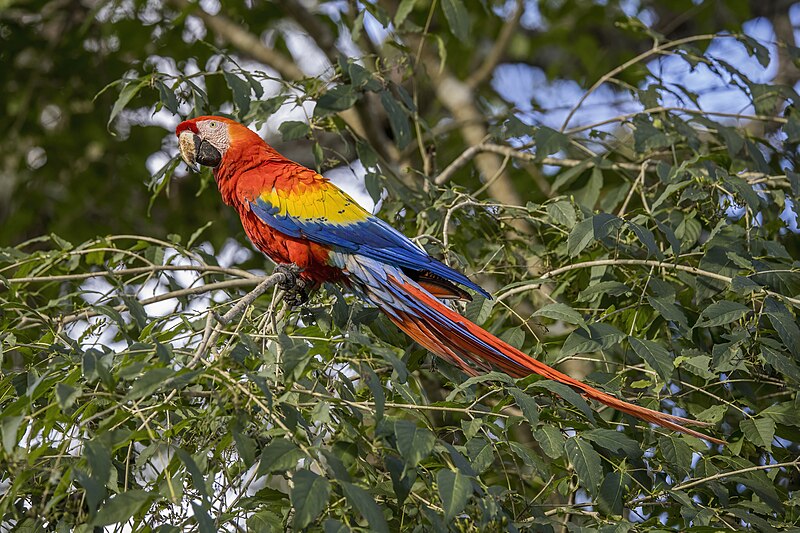
Quick Facts
| Attribute | Details |
|---|---|
| Scientific Name | Ara macao |
| Origin | Central & South America |
| Size | 32-36 inches (81-91 cm) |
| Weight | 2-2.5 lbs (900-1100 grams) |
| Lifespan | 40-50+ years |
| Noise Level | Extremely High |
| Talking Ability | Moderate (can learn words) |
| Diet | Pellets, nuts, fruits, vegetables |
| Care Level | Expert - Very challenging |
| Space Requirements | Very Large (minimum 36"x48"x60" cage) |
Recommended for Macaws
Lafeber Premium Pellets - Veterinarian-developed nutrition | Chewy Autoship - Save on macaw supplies | Nationwide Exotic Insurance - Coverage for avian care
Scarlet Macaw Overview
The Scarlet Macaw is arguably the most visually striking of all parrots, with its brilliant red, yellow, and blue plumage creating a spectacular display. Native to the humid evergreen forests of Central and South America, from Mexico to Peru, Brazil, and Bolivia, these magnificent birds have been admired for centuries and were kept by indigenous peoples long before European contact.
While their beauty is unmatched, Scarlet Macaws are considered one of the more challenging macaw species to keep due to their fiery temperament and tendency toward nippy behavior. They require experienced handlers who understand their complex needs and can provide consistent training and boundaries.
The Scarlet Macaw represents one of the most fascinating birds available in aviculture, combining striking physical characteristics with a behavioral complexity that rewards attentive ownership. With a potential lifespan of 40-50+ years, committing to a Scarlet Macaw is a decision that can span a significant portion of an owner's life. This species has evolved in specific ecological niches that have shaped everything from their dietary requirements to their social structure, and understanding these evolutionary foundations is essential for providing care that goes beyond mere survival to support genuine thriving.
Your avian vet is worth a five-minute call before any meaningful Scarlet Macaw diet adjustment — small advance interventions reliably prevent larger ones later.
Natural Habitat
In the wild, Scarlet Macaws thrive in: Your avian veterinarian and experienced Scarlet Macaw owners can offer perspective tailored to your situation.
- Lowland Rainforests: Primary habitat up to 3,300 feet elevation
- Forest Edges: Areas where forest meets open land
- River Corridors: Often found near waterways in gallery forests
- Clay Licks: Gather at clay deposits to neutralize toxins from unripe fruits
- Social Structure: Live in pairs, family groups, or flocks of up to 30
Temperament & Personality
Scarlet Macaws have distinctive personality traits.
- Bold & Confident: Known for their self-assured, sometimes demanding nature
- High-Spirited: More energetic and excitable than Blue and Golds
- Nippy: Tendency to use their beaks more freely; require consistent training
- Loyal: Form intense bonds with their chosen person
- Sensitive: React strongly to changes in environment or routine
- Independent Streak: Can be willful and require patient, persistent training
- Dramatic: Known for theatrical displays of emotion
Temperament Warning
Scarlet Macaws have a reputation for being more temperamental than other macaws. They are not recommended for first-time macaw owners. Proper socialization from a young age is crucial.
Housing Requirements
These large parrots need substantial space: Your avian veterinarian and experienced Scarlet Macaw owners can offer perspective tailored to your situation.
- Minimum Cage Size: 36"W x 48"D x 60"H - larger is always better
- Ideal Setup: Dedicated bird room or large aviary
- Bar Spacing: 1 to 1.5 inches with heavy-gauge stainless steel
- Perches: Natural hardwood branches of varying diameters
- Play Areas: Large play stand and multiple climbing structures
- Toys: Heavy-duty destructible toys; rotate frequently
- Location: Central family area but away from kitchen (toxic fumes)
Diet & Nutrition
Proper nutrition supports their vibrant plumage and health.
- Pellets (50-60%): High-quality macaw formulation as the dietary base
- Vegetables (20-25%): Sweet potato, carrots, dark leafy greens, peppers, squash
- Fruits (10-15%): Papaya, mango, berries, pomegranate, banana in moderation
- Nuts (5-10%): Macadamia, walnuts, almonds as training treats
- Seeds: Limited amounts; palm fruit and pine nuts occasionally
- Special Needs: May benefit from mineral clay supplements mimicking natural clay licks
Foods to Avoid
- Avocado (highly toxic)
- Chocolate and caffeine
- Alcohol
- Fruit pits and apple seeds
- Onions, garlic, and chives
- Salty and processed foods
Common Health Issues
Scarlet Macaws may experience various health conditions: Understanding how this applies specifically to Scarlet Macaw helps you avoid common pitfalls.
- Proventricular Dilatation Disease (PDD): Affects digestive and nervous systems
- Psittacine Beak and Feather Disease (PBFD): Causes feather abnormalities
- Papillomas: Oral tumors that can affect eating
- Feather Destructive Behavior: Often stress or boredom related
- Respiratory Infections: Including aspergillosis
- Chlamydiosis: Bacterial infection requiring prompt treatment
- Behavioral Issues: Biting, screaming can indicate underlying health problems
Training
Consistent training is especially important for Scarlet Macaws: Your avian veterinarian and experienced Scarlet Macaw owners can offer perspective tailored to your situation.
- Early Socialization: Critical for preventing behavioral issues
- Bite Prevention: Establish boundaries early; don't allow nippy behavior
- Step-Up Training: Essential foundation command
- Positive Reinforcement Only: Never punish - builds fear and aggression
- Consistency: All family members must follow same training rules
- Professional Help: Consider avian behaviorist consultation
- Patience: Progress may be slower than with other macaws
Noise & Vocalization
Understanding Scarlet Macaw vocalizations is essential.
- Volume: Among the loudest parrots; can exceed 105 decibels
- Frequency: Vocal throughout the day with peak dawn/dusk calling
- Talking: Moderate ability; can learn 15-30 words with practice
- Screaming: Natural behavior but can escalate without proper management
- Living Situation: Requires detached home; will disturb neighbors
- Noise Triggers: Learn what triggers screaming to manage environment
Compatibility
Consider these factors for household integration: A little curiosity about how the Scarlet Macaw is wired goes a long way toward preventing avoidable missteps.
- Children: Not recommended with young children due to nippy nature
- Other Pets: Supervision required; can be aggressive
- Other Birds: May be dominant; careful introduction required
- Single-Person Bonding: Strong tendency to prefer one person
- Time Requirements: 3-5 hours daily interaction minimum
- Household Agreement: All members must accept noise and mess
Is a Scarlet Macaw Right for You?
Of the many recurring demands of Scarlet Macaw care, this one is easy to underweight and easy to regret underweighting.
Ideal Owners Have:
- Previous macaw or large parrot experience
- Detached home in bird-friendly area
- Thick skin (literally and figuratively for occasional nips)
- Patience for challenging training periods
- Financial resources for premium care
- Long-term commitment (40-50+ years)
- Understanding of hormonal behavior patterns
Scarlet Macaws May Not Be Ideal For:
- First-time bird owners
- First-time macaw owners
- Families with young children
- Apartment or condo residents
- Those wanting a cuddly, docile pet
- Anyone with limited time for interaction
Whether a Scarlet Macaw fits your life comes down to a few practical questions. How much time can you realistically spend on exercise, grooming, and training each day? Is your living space suitable? Can you afford both routine care and the occasional surprise vet bill over the next 40-50+ years? If the honest answers line up, a Scarlet Macaw can be a genuinely good match. If they don't, there is no shame in choosing a different bird — or waiting until your circumstances change.
People who live with a Scarlet Macaw tend to develop a deep appreciation for the breed's personality — its distinct character becomes part of the household's rhythm. That bond does not happen overnight, but it builds steadily when care is consistent and expectations are grounded.
Cost of Ownership
Most new Scarlet Macaw owners are surprised by first-year costs. The initial setup — vet visits, vaccinations, supplies, and often training classes — can easily double the annual maintenance figure. The good news is that subsequent years are more predictable. Just keep in mind that senior Scarlet Macaws may need additional care as they enter the last few years of their 40-50+ years lifespan.
Think of preventive care as an insurance policy with a guaranteed payout. The cost of annual exams, vaccinations, and routine health monitoring is a known quantity you can budget for. The cost of treating a preventable disease is unpredictable and almost always higher. For Scarlet Macaw owners, staying on top of preventive care is one of the simplest ways to reduce lifetime veterinary expenses.
Related Species
If you're interested in Scarlet Macaws, consider these alternatives.
- Blue and Gold Macaw - More even-tempered, easier for macaw beginners
- Green-Wing Macaw - Larger but often gentler temperament
- Military Macaw - Slightly smaller with steady personality
- Hyacinth Macaw - Gentle giant but extremely expensive
Ask Our AI About Scarlet Macaws
Have specific questions about Scarlet Macaw care, behavior, or health? Our AI assistant can provide personalized guidance.
Get Personalized AI Guidance
Ask Our AI NowDecision Guides for Scarlet Macaw
Use these only when comparing food, insurance, ownership budget, or beginner fit for this specific pet.