Green-Cheek Conure
This page is educational reference material for preparing questions. A licensed veterinarian examines the animal, makes the diagnosis, and sets the treatment.
Affiliate links may earn a commission. Affiliate disclosure.
Quick Facts
| Attribute | Details |
|---|---|
| Scientific Name | Pyrrhura molinae |
| Origin | South America (Bolivia, Brazil, Argentina) |
| Size | 10 inches (26 cm) |
| Weight | 2-3 oz (60-80 grams) |
| Lifespan | 20-30 years |
| Noise Level | Low-Moderate (quiet for a conure) |
| Talking Ability | Limited (may learn few words) |
| Diet | Pellets, vegetables, fruits, seeds |
| Care Level | Beginner-Intermediate |
| Space Requirements | Medium (minimum 18"x18"x24" cage) |
Recommended for Conures
Lafeber Nutri-Berries - Foraging nutrition conures love | Chewy Autoship - Save on bird supplies | Nationwide Exotic Insurance - Coverage for avian care
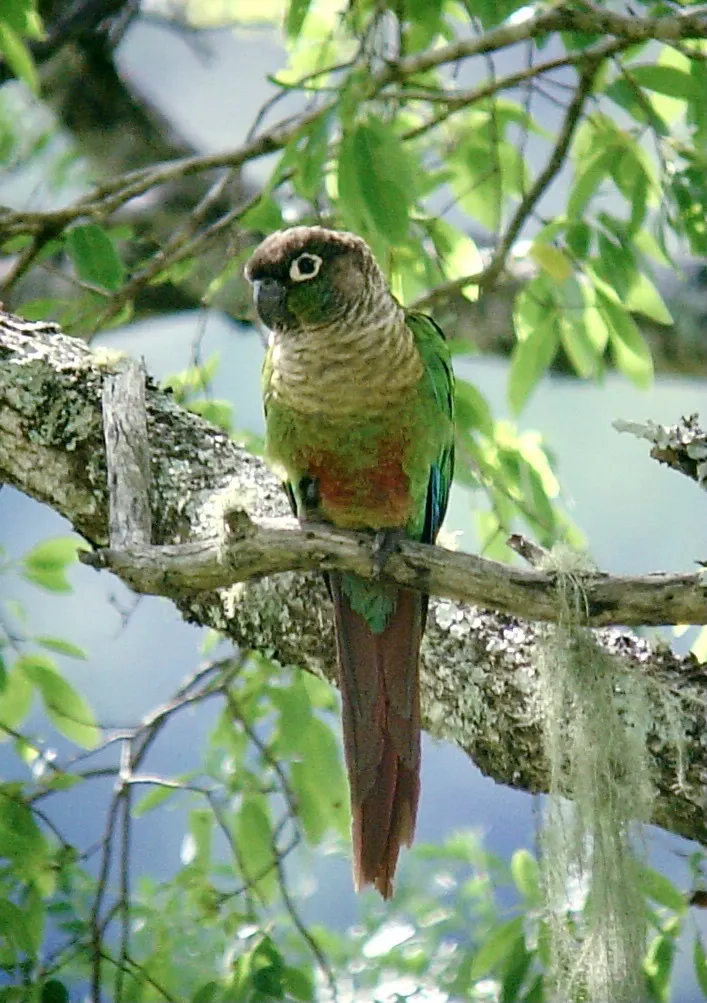
Green-cheek conures, Pyrrhura molinae, are the small conures from south-central South America that ended up as the "quiet conure" recommendation. They are about 10 inches and 60 to 80 grams, with a long tail and a pine-green body. Noise is low to moderate if you have ever lived with a sun conure, and still enough to announce you when you come home. Talking is limited. Personality is not.
Plan on 20 to 30 years. That is the fact that should decide whether a cute cinnamon mutation belongs in the house.
Sleep and the teenage beak
These birds get nippy when they are under-slept, hormonal, or bored. A dark, covered night of about 12 hours, a cage that is not in the living room television glow, and a morning that starts predictably will do more than any "bite pressure" gadget. Teach step-up with a treat. Do not wrestle with your fingers. Adolescents grow out of a lot of it if you do not turn biting into the most interesting game of the day.
Eighteen by eighteen by twenty-four inches is the smallest cage worth considering. Use it as a floor, then add width if you can, plus a play stand. Toys should be shreddable. A green-cheek with only a mirror and a bell will shred your earphones instead.
Diet and the long bill
Pellets, vegetables, a little fruit, and seed as a garnish. They will live on sunflower seed if you let them, and then you will meet fatty liver disease in a bird that is still young by the lifespan chart. Weigh the bird every week or two on a kitchen scale. A dropping weight is often the first real sign of illness.
Annual avian exams are the right vet plan. The AAV directory is how you find someone who will not treat the bird like a small dog. Tail bobbing, sitting fluffed, or a sudden silence is the picture on the quiet-bird page. The checker is useful when you are unsure; a bird on the cage floor is not a monitor-at-home situation.
Green-cheeks suit people who want a hands-on small parrot and will be around for decades. They are a clumsy match for a house of people who dislike being beaked while the bird learns the rules.
Green-cheek conure manners
Do green-cheek conures scream?
Less than sun conures or cockatoos. They still contact-call, and a bird without enough sleep gets sharper about it. Twelve hours of dark, quiet night helps.
Why is my conure biting?
Adolescent green-cheeks test skin. Consistent step-up, a rotation of toys, and not yanking the hand away in a game usually lowers it. A bite that comes with fluffed feathers and a change in droppings is medical, not teenage.
How long do they live?
Often 20 to 30 years. The small size fools people into treating them as a short-term pet.
What cage do they need?
The quick facts list 18 by 18 by 24 inches as a minimum. Wider is better, and out-of-cage time is part of the cage plan, not a bonus.
Decision Guides for Green-Cheek Conure
Use these only when comparing food, insurance, ownership budget, or beginner fit for this specific pet.